


If your faucets have slowed to a trickle, your shower loses pressure when someone flushes, or the sprinklers barely spit, low well water pressure is the symptom — but it is rarely the actual problem. On a private well, pressure is the end result of a chain of equipment working together: the pump in the well, the pressure tank, the pressure switch, and the filters and pipes in between. When pressure drops, one link in that chain has usually started to fail. The good news is that most causes of low well water pressure in North Texas are common, identifiable, and fixable once you know what to look for.
Need it sorted quickly? Call (817) 480-7971 and a licensed Flowcore Water technician can diagnose the pressure loss and tell you exactly what is causing it.
What causes low well water pressure in a North Texas well?
Low pressure almost always traces back to one of a handful of culprits. Here are the ones we find most often on wells across the Dallas–Fort Worth area, roughly in order of how common they are.
1. A waterlogged pressure tank
This is the single most common cause we see. A well pressure tank holds a cushion of compressed air behind a rubber bladder; that air is what pushes water to your fixtures between pump cycles. When the bladder tears or loses its charge, the tank fills with water and the air cushion disappears. The tank can then only hold a small amount of water before pressure drops and the pump has to switch back on — so pressure feels weak and fluctuates, and the pump clicks on and off far more often than it should. A waterlogged tank is also hard on everything downstream, because the rapid cycling wears the pump out early. In most cases the bladder cannot be replaced on its own, so the tank itself is replaced.
2. A pressure switch that is set wrong or failing
The pressure switch is the small device that tells the pump when to turn on and off. Most residential systems are set to a 30/50 or 40/60 PSI range — the pump kicks on at the lower number and shuts off at the higher one. If the switch is set lower than it should be, your pressure will feel weak even though everything else is healthy. If the switch contacts are corroded or the small port behind it is clogged with sediment, the pump may not respond correctly at all. Switches are inexpensive, but the wiring carries line voltage, so adjustment and replacement are best handled by a professional.
3. A worn or undersized well pump
Pumps do not last forever. A well pump that is reaching the end of its life can struggle to build pressure, run constantly without catching up, or push air and sputter at the tap. Sometimes the pump is simply undersized for how the household uses water now — a system that was fine for a small home may not keep up after a pool, a second bathroom, or a large irrigation zone is added. Either way, the fix starts with measuring the pump's actual output against what the home needs, which is part of any thorough well pump repair visit.
4. Clogged sediment filters or iron buildup
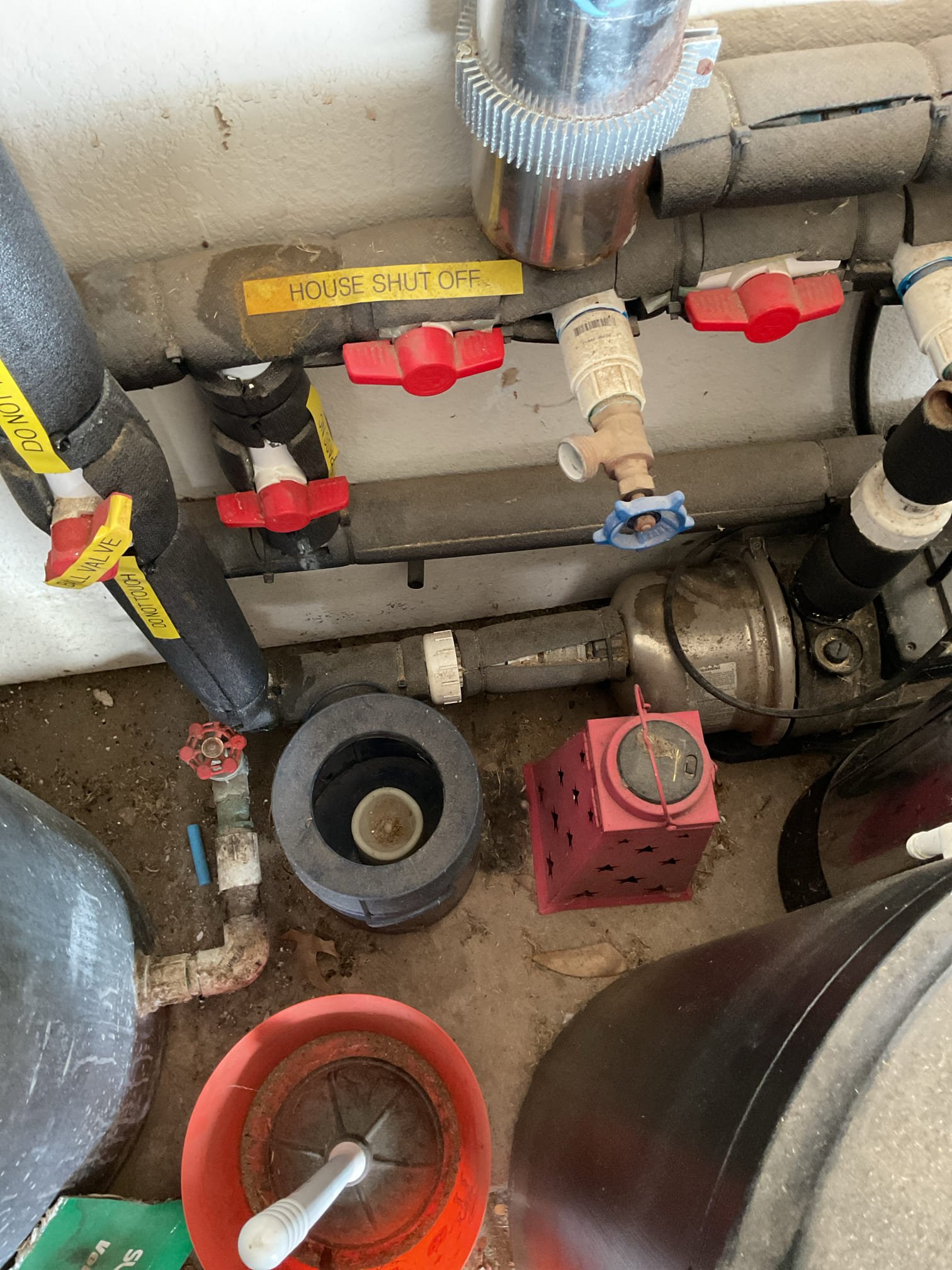
North Texas groundwater is hard and frequently carries iron and fine sediment, and that takes a toll on the parts of your system that restrict flow. Sediment screens and whole-house filters do their job by trapping particles — and as they load up, they choke the flow and pressure falls. Iron can also leave scale and rusty buildup inside pipes and fixtures over time. If your pressure has dropped gradually rather than suddenly, a clogged filter cartridge or a fouled screen is a likely suspect. We cover the wider picture of what is in local groundwater in our guide to common water quality issues in Texas wells, and the right sediment and iron filtration setup keeps these problems from coming back.
5. A declining well or a clogged well screen
Sometimes the issue is the well itself rather than the equipment. Iron bacteria can build a slimy biofilm that clogs the well screen and the area of the aquifer right around the well, which steadily reduces how much water the well can deliver. North Texas summers add to this: heavy irrigation across a neighborhood and seasonal drawdown can lower the water table, so a well that was borderline in spring may not keep up in July. When yield is the real problem, the answer is often well rehabilitation rather than new equipment — and you can read how that plays out with iron in our piece on iron bacteria and well rehab in North Texas.
6. A leak somewhere in the system
A leak between the well and the house — a cracked underground line, a bad fitting, or a failing check valve — bleeds off pressure before it ever reaches your fixtures. Leaks can also make the pump run when no one is using water. If your pressure is low and your pump seems to cycle for no reason, it is worth ruling out a leak before replacing anything.
Why does my well pressure drop when I run the sprinklers or several fixtures at once?
This is one of the most common calls we get, and it usually points back to the pressure tank or the pump. A steady, heavy draw like an irrigation zone empties a small or waterlogged tank almost immediately, so the pump runs continuously and pressure sags the whole time the sprinklers are on. If the tank checks out, the next suspect is a pump that no longer has the capacity to meet peak demand — fine for one shower, not enough for two bathrooms plus the lawn. Because the same symptom has more than one cause, the reliable way to settle it is to measure the tank's air charge, the switch settings, and the pump's output together rather than guessing.
What can you safely check before calling?
A few checks are reasonable for a careful homeowner, and they help you describe the problem accurately even if you ultimately call for help. Start with the pressure gauge near your tank and note the reading as water runs — if it never climbs into the normal 40 to 60 PSI range, that is useful information. You can also tap the side of the pressure tank: a healthy tank sounds hollow near the top where the air is and solid near the bottom, while a waterlogged tank sounds solid most of the way up. Pressing the pin on the air valve at the top of the tank is another quick test — air should hiss out, and if water sprays instead, the bladder has failed.
Where to stop is just as important. Adjusting the pressure switch means working around line-voltage wiring, and pulling a pump or opening the wellhead calls for the right equipment and training. Those steps are where a licensed contractor protects both your safety and your equipment. If you want a sense of the whole system's condition before there is a problem, a routine well inspection and maintenance visit catches a tired pump or a fading tank before it leaves you without water.
When to call Flowcore Water
If pressure has dropped suddenly, if the pump is short-cycling, or if your own checks point to the tank, switch, or pump, it is time to have it looked at — short cycling in particular can shorten a pump's life, so it is worth addressing sooner rather than later. Flowcore Water has worked on private wells across the Dallas–Fort Worth area for two decades, from Fort Worth through the rural communities of northwest Tarrant County. A technician will measure the whole system, explain what is actually causing the pressure loss, and fix the cause rather than the symptom. Request a visit or call (817) 480-7971.
Frequently Asked Questions About Low Well Water Pressure
Why does my well water pressure drop when the sprinklers run?
The most common reason is a waterlogged pressure tank. When the tank's bladder fails, the tank can only hold a little water before the pump has to switch on again, so a steady demand like an irrigation zone outpaces it and pressure sags. A worn pump or a well that cannot keep up with high summer demand can cause the same symptom. A pressure test on the tank usually tells which it is.
Can I fix low well water pressure myself?
Some checks are safe for a homeowner: reading the pressure gauge, doing a tap test on the pressure tank, and confirming the pressure switch settings. Recharging a tank's air precharge is also within reach for a careful DIYer. Anything involving wiring on the pressure switch, pulling a pump, or working inside the well should be left to a licensed contractor, both for safety and to protect the equipment.
How do I know if it is the pressure tank or the well pump?
A waterlogged tank usually shows rapid pump cycling and a tank that sounds solid when you tap it, and water sprays from the air valve when you press the pin. A failing pump more often shows up as steadily weak pressure, sputtering air, or the pump running constantly without building pressure. The two can overlap, which is why a technician measures tank precharge, switch settings, and pump output together before replacing anything.
Living with weak water pressure on your well? Call (817) 480-7971 and Flowcore Water will find the cause and put the pressure back where it belongs.
Get Pre-Approved Financing
Flowcore Water partners with Greensky to offer convenient financing options for water well services
Flowcore Water Preferred Customer Membership
Enroll today and enjoy the year-long benefits!


