


The tap runs dry, the shower stops mid-rinse, or you walk into the kitchen and nothing comes out of the faucet at all — on a private well, complete water loss is one of the more unsettling things that can happen, but it is almost always traceable to one of a handful of causes. The three usual suspects are the well pump, the pressure tank, and the line running between the well and the house, and figuring out which one it is starts with a few quick checks anyone can do before calling for help.
Need it looked at now? Call (817) 480-7971 for emergency well pump service in North Texas, and a licensed Flowcore Water technician can find the cause and get water running again.
What usually causes a well to lose water completely?
A full stop is different from water that has just gotten weak — something in the chain from the well to your fixtures has failed outright rather than gradually worn down. Here is what we find most often, roughly in the order worth checking.
1. A tripped breaker or other power issue
A well pump runs on a dedicated circuit, and a tripped breaker or blown fuse will stop it cold with no other warning. This is worth checking first because it costs nothing and takes a minute: open the electrical panel, look for a breaker that has flipped to the middle position, and reset it. If the breaker trips again as soon as you reset it, stop there — that points to a short or a failing pump drawing too much current, and resetting it repeatedly can make the problem worse.

2. A pressure switch or pressure tank that has failed
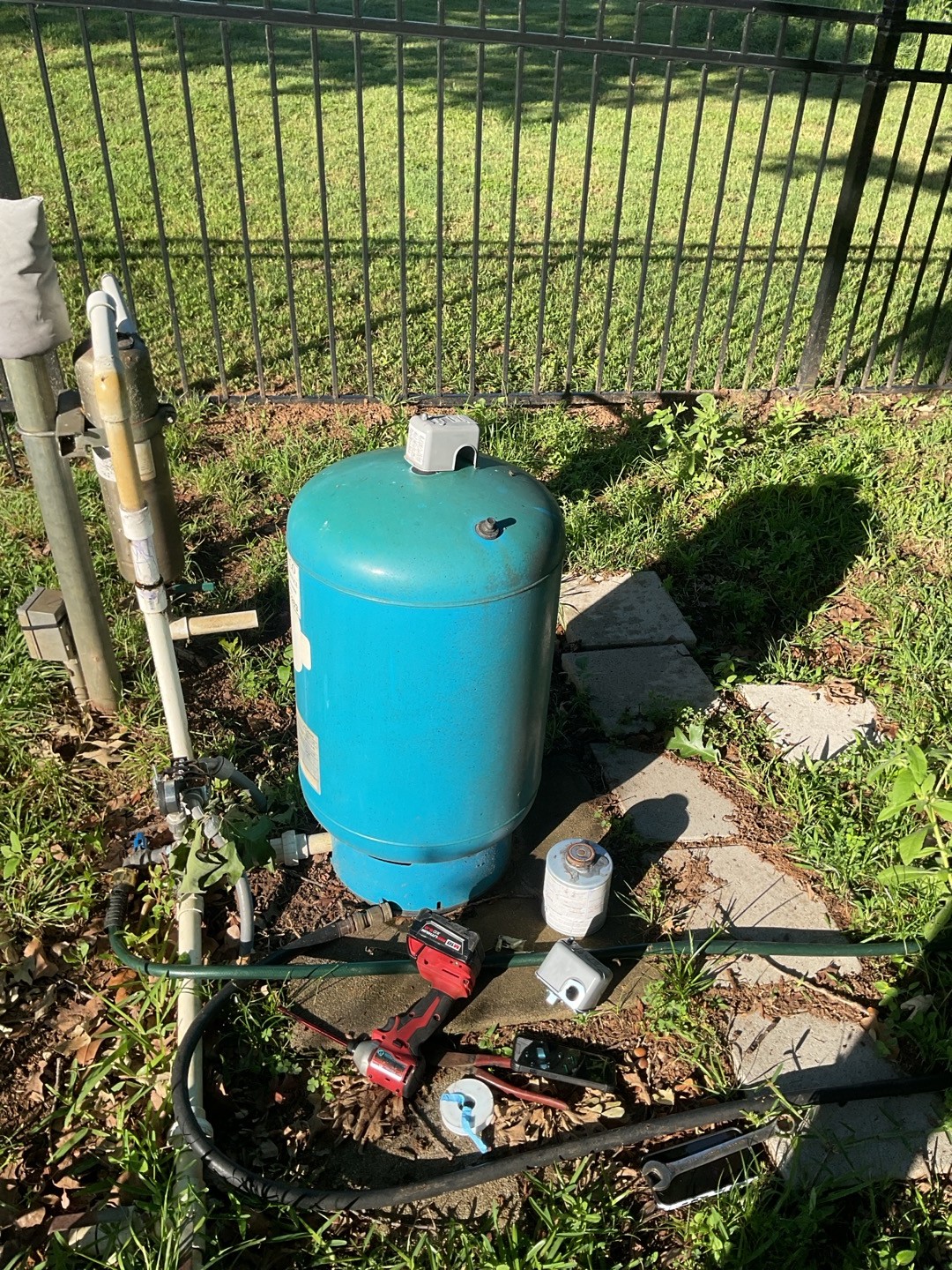
The pressure switch tells the pump when to turn on, and if it fails in the wrong position, the pump may never get the signal to start. A pressure tank that has gone fully waterlogged behaves differently — it can still deliver a little water before the pump kicks on, so a tank problem more often shows up as sputtering or on-again-off-again flow rather than an instant, total stop. Either way, the pressure gauge on the tank is a useful first read: a gauge sitting at or near zero with the pump silent usually means the pump isn't running at all, while a normal-looking gauge with no water at the tap can point to a blockage or a valve that got closed somewhere along the line.
3. A pump that has burned out or worn through
Submersible well pumps have a working lifespan, and when a motor finally gives out, it typically does so without much warning — one day it is running, the next it isn't. If you can hear the pump humming or cycling when a faucet is opened but no water follows, that points toward the pump itself, or toward a leak pulling water away before it reaches the house. A pump nearing the end of its life sometimes gives smaller warning signs first, like sputtering air or pressure that never quite builds, but plenty of failures show up as a hard stop with no lead-up at all.
4. A well that has run low or gone dry
Sometimes the equipment is fine and the well itself simply cannot keep up. Groundwater levels across much of North Texas have declined over the long term, and a well that has been borderline for a while is more likely to fall behind during the hottest weeks of summer, when household use and irrigation both peak at the same time. A well running low behaves differently from a mechanical failure — the pump may run and run without the tank ever pressuring up, because there isn't enough water coming in to keep pace. This is one of the reasons a routine well inspection is worth scheduling before a hot summer rather than after the tap goes dry.
5. A broken pipe or line
Less common than a pump or tank failure, but still worth ruling out: a cracked line between the wellhead and the house, a fitting that has given way, or a break from ground settling or a nearby dig. A pipe break often comes with a giveaway — a pump that runs continuously even when no one is using water, or an unexplained wet or unusually green patch in the yard along the line's path. When the well and pump both check out fine but water still isn't reaching the house, a leak is the next thing to rule out.
How can you tell which one it is before calling?
A few checks are safe and useful for a homeowner to run through first, and they help you describe the problem accurately even if you end up calling for help anyway. Start at the breaker panel, since that rules out the simplest cause in under a minute. From there, look at the pressure gauge on the tank and note whether it reads zero, normal, or somewhere low but not empty — each of those points in a different direction, as covered above. Finally, have someone turn on a faucet while you listen near the pressure tank or the wellhead: hearing the pump run tells you it has power, while silence when a faucet is opened usually sends you back to the electrical side of things.
Where to stop matters just as much as where to start. Anything past the breaker panel and the pressure gauge — opening the wellhead, working on wiring at the pressure switch, or pulling a pump — calls for the right tools and training, both for your safety and to avoid turning a simple fix into a bigger repair.
Is it no water at all, or just weak pressure?
It's worth being clear about which problem you actually have, because the fixes are different. A complete stop — nothing at the tap, no matter how long you wait — points toward the causes above: power, pump, tank, well yield, or a broken line. If you're still getting water but it's noticeably weaker than usual, or it drops when a sprinkler zone or a second bathroom kicks in, that's a different and generally less urgent problem, and we cover those causes separately in why is my well water pressure low.
Who do you call — a well contractor or a plumber?
This is a common sticking point, because a dry faucet looks the same whether the problem started at the well or somewhere inside the house. As a rough guide, a well contractor is the right call when the issue is likely at the wellhead, the pump, or the pressure tank, and a plumber is the right call when it's clearly an interior line, like a burst pipe under a slab. Since those two causes can be impossible to tell apart from the faucet alone, a provider that handles both well repair and plumbing can diagnose whichever one it turns out to be, instead of you guessing and possibly calling twice.
When to call Flowcore Water
If the breaker trips again as soon as you reset it, if the pump runs constantly without the tank ever building pressure, or if you've checked the basics and still have no water, it's time to have someone look at the whole system rather than keep guessing. Flowcore Water has worked on private wells across the Dallas-Fort Worth area for two decades, including the rural communities around Saginaw and Haslet. A technician will check the power, the tank, the pump, and the line together, tell you which one actually failed, and fix that instead of replacing parts by trial and error. If the well itself turns out to be the issue rather than the equipment, we can also talk through well rehabilitation or, when a well has truly reached the end of its useful life, a conversation about drilling a replacement well. Request a visit or call (817) 480-7971 for same-day service.
A yearly check through our maintenance plan is also worth considering — most of the failures above give some warning if a technician is looking for it before the tap actually runs dry, and it pairs well with the routine service schedule we cover in how often to service your well.
Frequently Asked Questions About No Water From Your Well
Why did my well suddenly stop producing water completely?
A total loss of water almost always comes down to one of a few things: a tripped breaker cutting power to the pump, a pressure switch or pressure tank that has failed, a pump that has burned out, a well that has run low, or a broken pipe between the well and the house. Checking the electrical panel first is worthwhile, since a tripped breaker is one of the more common culprits and costs nothing to rule out.
Is a tripped breaker really a common reason a well loses water?
Yes. A meaningful share of no-water calls turn out to be a tripped breaker or blown fuse rather than a failed pump or tank. It is the first thing worth checking because it takes a minute and requires no tools, and if the breaker trips again immediately after resetting, that points to an electrical fault that needs a professional rather than a second reset.
How do I know if it's the pump or the pressure tank?
The pressure gauge on the tank is the fastest clue. A gauge reading near zero with the pump not running points to a power or switch problem. A gauge that reads normal but no water reaches the fixtures suggests a blockage or closed valve. A gauge that stays very low even while the pump runs points toward a failing pump, a major leak, or a well that cannot keep up with demand. Confirming which part has actually failed usually takes a technician measuring pump output and tank pressure together.
Can a private well just run low or dry in North Texas?
It can, particularly during peak summer demand when irrigation and household use both climb at once. Groundwater levels across much of the Dallas-Fort Worth area have declined over the long term, and a well that has been borderline for a while is more likely to fall behind during a hot stretch. A dry or low-yield well is usually addressed with well rehabilitation rather than pump or tank replacement.
Could a broken pipe cause a complete loss of water?
Yes, though it is less common than a pump or tank issue. A cracked line between the well and the house or a failed fitting can stop water from reaching your fixtures even though the well and pump are working normally. A pump that runs constantly with no one using water, or a wet spot in the yard, is often the giveaway that the problem is a leak rather than the equipment itself.
When I have no water, do I call a well contractor or a plumber?
Start with a well contractor when the problem is likely at the well, the pump, or the pressure tank, and call a plumber when the issue is clearly inside the house, such as a burst interior line. Because the two causes can look identical from a dry faucet, a full-service provider that handles both wells and plumbing can diagnose either without you having to guess first and call twice.
Completely out of water on your well? Call (817) 480-7971 and Flowcore Water will find out why and get it fixed.
Get Pre-Approved Financing
Flowcore Water partners with Greensky to offer convenient financing options for water well services
Flowcore Water Preferred Customer Membership
Enroll today and enjoy the year-long benefits!


