

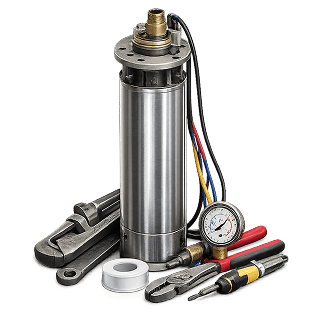
Well Repair in North Texas and DFW
Pump, pressure tank and switch repair across the full DFW metro. We diagnose before anything gets replaced, and you get a written estimate before work starts.
Trusted by North Texas since 2006
Same-day Emergency Service
Financing Available
Skilled & Certified Professionals
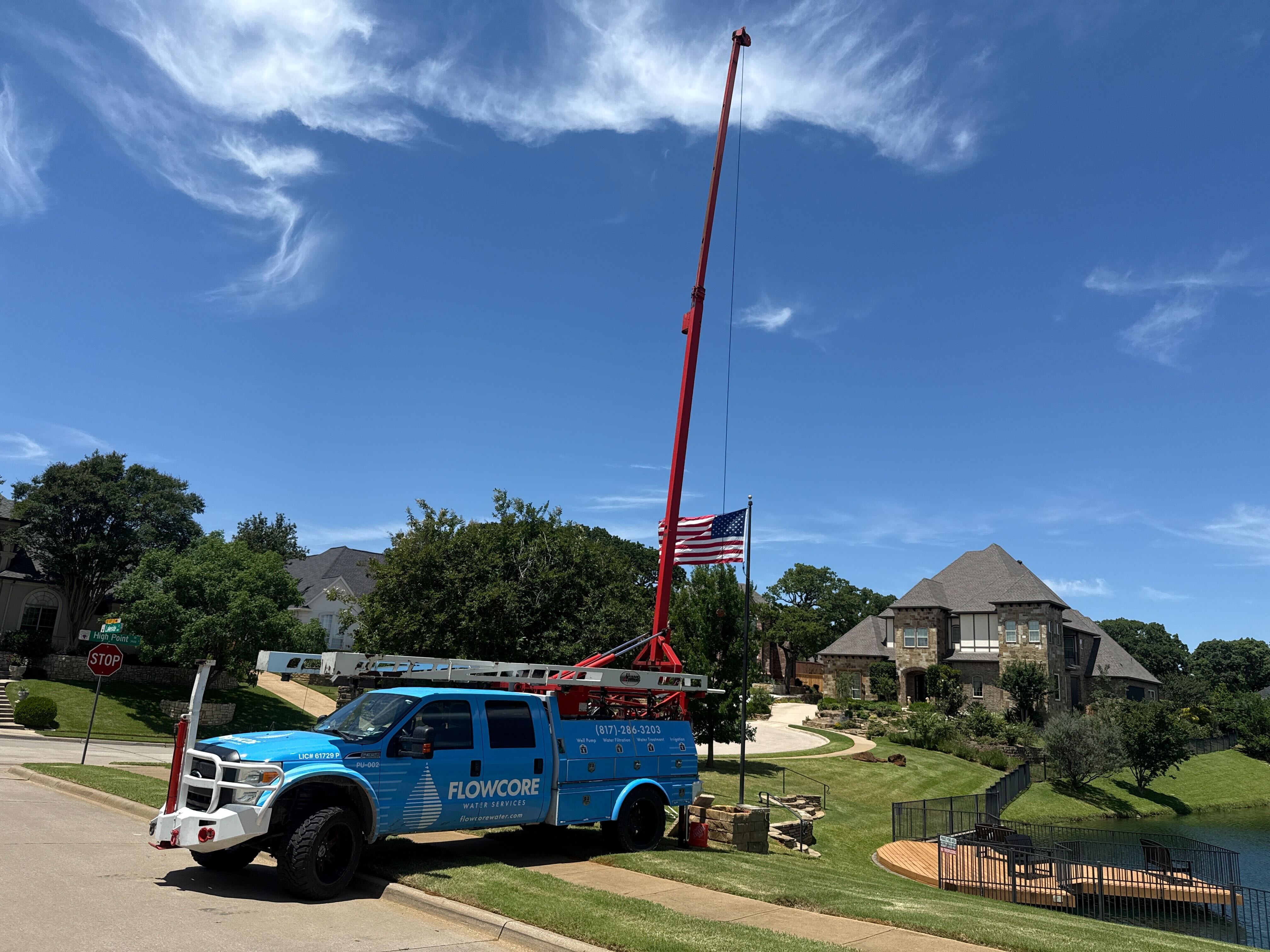
A well that won't hold pressure, won't turn on, or keeps tripping its breaker needs well pump repair, not a maintenance visit. Flowcore Water provides water well repair and pump service across Dallas-Fort Worth and North Texas, handling submersible and jet pumps, pressure tanks, switches, and the wiring that connects them. If your water pressure has dropped, your pump is short-cycling, or your water has changed color or smell, that's a system telling you something specific, and the fix is usually faster than homeowners expect once the actual cause is identified.
Call (817) 480-7971 for water well and pump service today, or request service online and we'll confirm a time.
What Are the Warning Signs Your Well Needs Repair?
Most well problems show up as one of a handful of patterns, and each one points toward a different part of the system. Low or dropping water pressure usually traces back to the pump, the pressure tank, or a failing switch. Water that turns on and off in short bursts, sometimes called short-cycling, is almost always a pressure tank or switch problem rather than the pump itself. No water at all can mean the pump has failed, the power supply to it has been interrupted, or a component downstream has seized.
Other signs are less obvious but just as diagnostic. A well pump that runs constantly without building pressure is working against a leak somewhere in the line. Water that suddenly turns cloudy, sandy, or has a metallic taste often signals a mechanical problem inside the well casing rather than a water quality issue on its own. A breaker that trips repeatedly when the pump kicks on points to a motor or wiring fault, not a breaker problem, and resetting it repeatedly without a diagnosis risks burning out the motor for good.
Not every symptom is a repair. If your pump just needs priming, see our guide: How to Prime a Well Water Pump.
How Does Flowcore Diagnose a Well Problem?
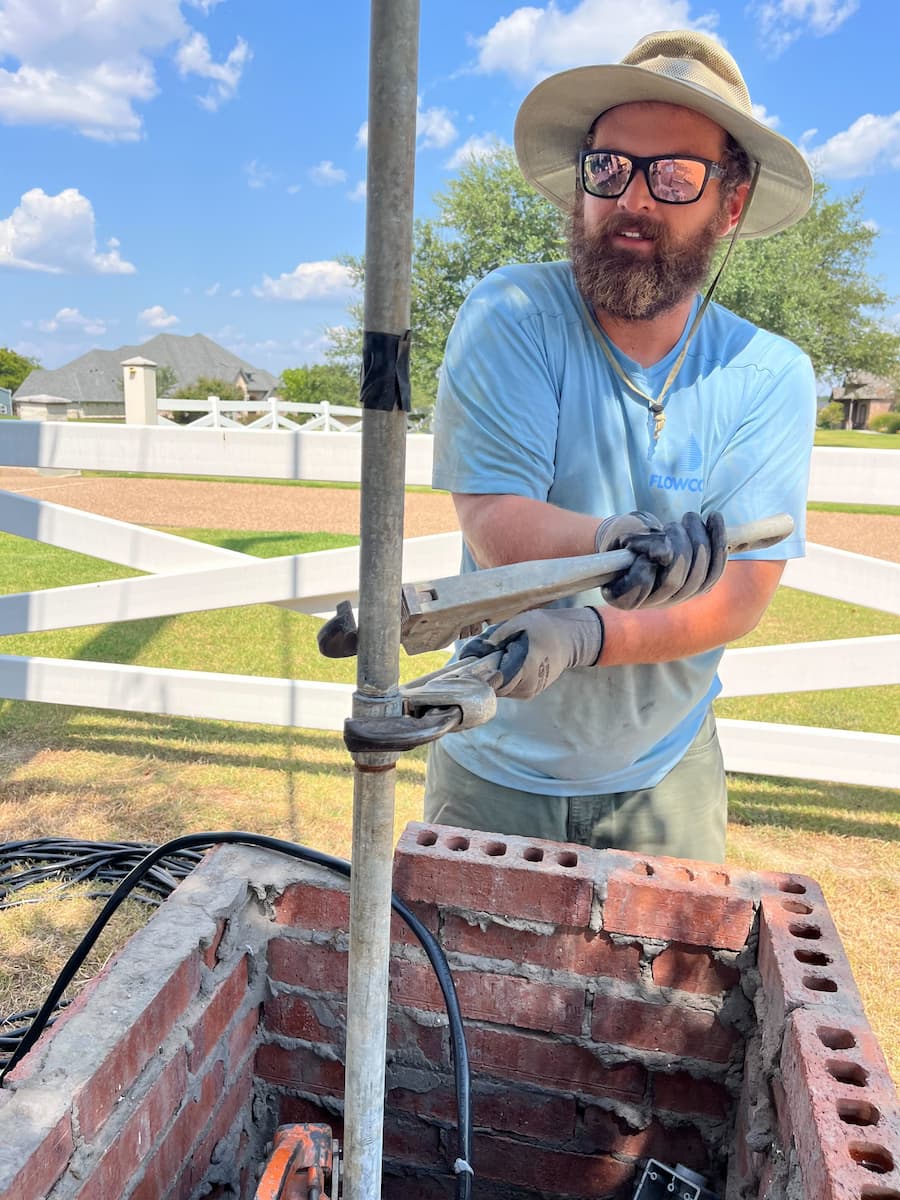
Diagnosis starts at the pressure tank and switch, since those two components cause more service calls than any other part of the system and are the fastest to rule in or out. From there, a technician checks amperage draw at the pump, tests static and pumping water levels, and inspects the wiring and control box for damage or corrosion. On systems where the history is unclear, particularly a well that came with a home purchase, a full well inspection establishes a baseline before any well pump repair service begins.
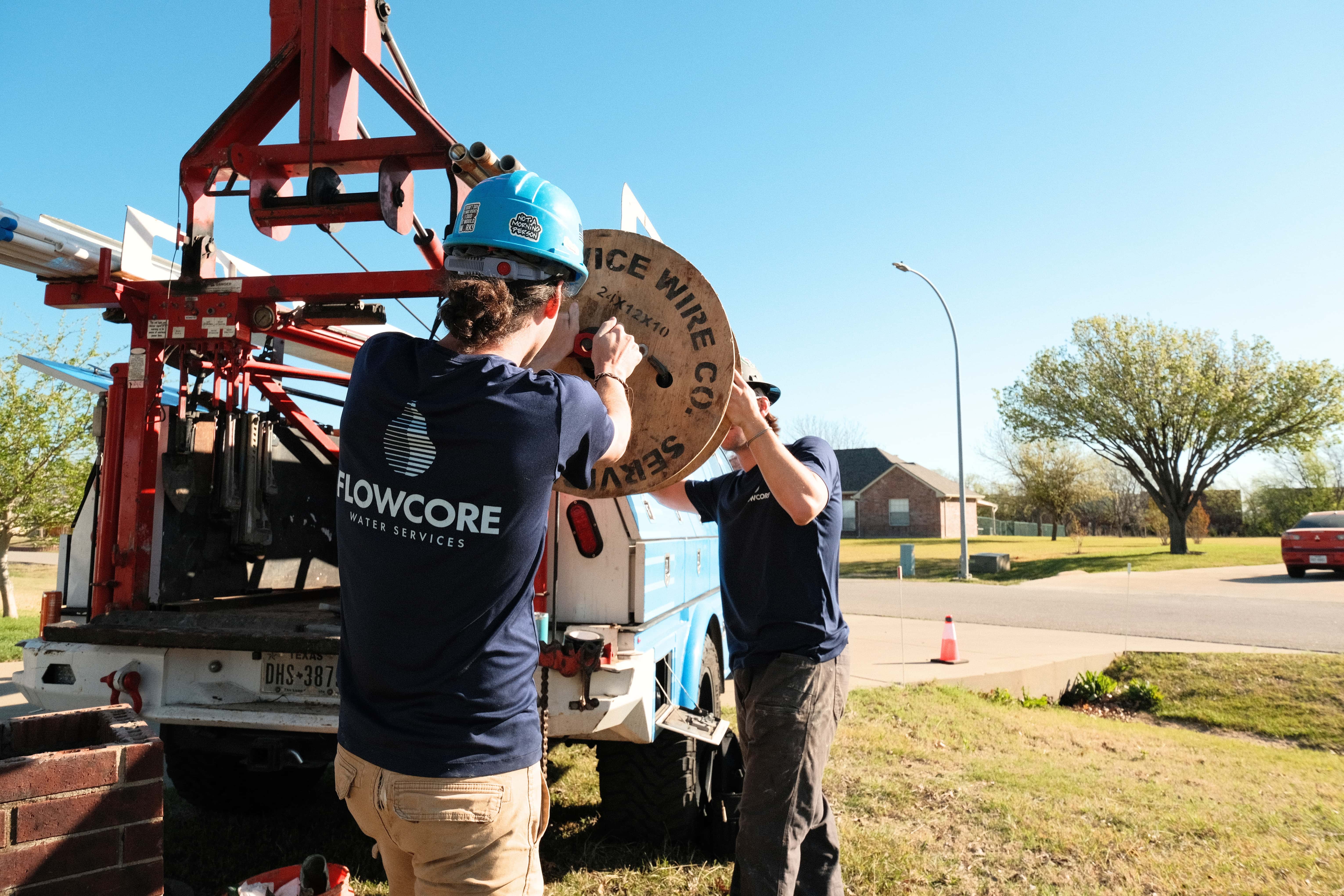
When the cause isn't visible from the surface, the pump itself has to come out. Pulling a submersible pump from a deep well takes the right rig and enough hands to do it safely, which is why pump pulling is handled as its own step rather than something attempted alongside the repair. Once the pump is out, the real condition of the motor, cable, and drop pipe becomes obvious in a way that no surface test can replicate.
What Causes Well Pump Failure in North Texas?
Well depth and construction across North Texas vary by which aquifer a property draws from, and that variation changes how a pump fails and how it gets repaired. Wells drawing from the Trinity Aquifer commonly run 200 to 800 feet deep across Denton, Wise, Cooke, and Montague counties, while wells reaching the shallower Woodbine formation in parts of the region sit at less depth with strong yield where the formation is present. A deeper well puts more load on a pump and more wear on the drop cable and wiring than a shallow one, which is part of why two homes a few miles apart can have very different well service and repair histories.
Submersible Well Pump Repair: How These Pumps Fail
Submersible well pump repair starts with pulling the unit, since these pumps sit at the bottom of the well casing, below the water line. Failure typically shows up as a motor that won't start, a breaker that trips on startup, or water that runs sandy after years of otherwise clean supply, the last of which often means the impeller or screen has started to wear. Because the pump, motor, and cable are one submerged assembly, a failure in any one of the three usually means replacing the whole unit rather than a single part.
Jet Well Pump Repair: How These Pumps Fail
Jet well pump repair is usually more straightforward, since these pumps sit above ground, typically in a well house or utility space, and pull water up through suction rather than pushing it from below. That above-ground placement makes jet pumps more exposed to freeze damage and easier to diagnose, since the motor, pressure switch, and plumbing connections are all visible and testable without pulling anything from the well. A cracked pipe fitting or a worn impeller are the most common causes, and most jet pump repairs can be completed in a single visit.
What's Different About Shallow-Well vs. Deep-Well Systems?
Shallow-well systems, generally drawing from less than 25 feet, use a single-pipe jet pump and are the simplest configuration to service. Deep-well systems require either a two-pipe jet pump or, more commonly in this region given typical Trinity and Woodbine depths, a submersible pump rated for the specific depth and flow the well produces. Installing the wrong pump size for the well's depth is a common source of repeat failures, which is why a repair on a deep well often includes rechecking that the existing pump was ever correctly matched to the well in the first place, ideally by well pump installers familiar with local aquifer depths.
Is the Problem the Pressure Tank or the Pressure Switch?
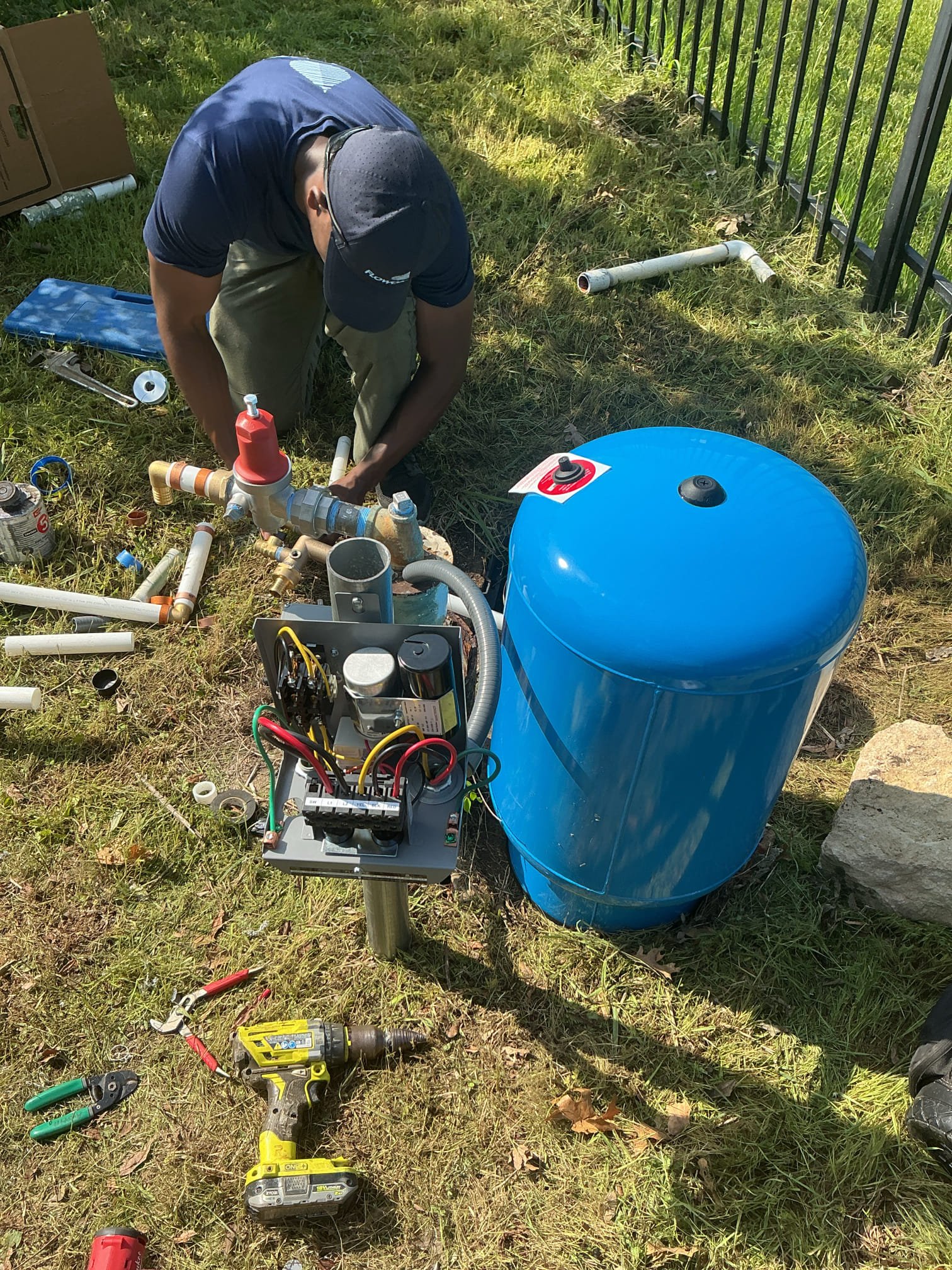
These two components fail differently and get misdiagnosed as "the pump" more often than anything else in the system. Both sit between the well and the house, and both can produce symptoms, like short-cycling and pressure loss, that look identical to a pump problem from inside the house.
Signs of a Failing Pressure Tank
A pressure tank holds a cushion of pressurized air over a rubber bladder or diaphragm. When that bladder fails, the tank waterlogs, and the pump starts cycling on and off every few seconds instead of running in a normal cycle every few minutes. A tank that feels heavier than it should, or that shows water coming from the air valve on top, has a failed bladder and needs replacement rather than repair.
Signs of a Failing Pressure Switch
The pressure switch tells the pump when to turn on and off based on tank pressure. A switch with worn or corroded contacts can stick in either position: pump runs constantly and never shuts off, or pump never kicks on even though pressure has dropped. Switches are inexpensive relative to a pump, which is exactly why ruling one out first, before assuming the pump has failed, matters for the size of the repair bill.
Should You Repair or Replace Your Well System?
The honest answer depends on the age of the equipment, how often it's already been repaired, and what the well itself can support, not just what's currently broken. A pump under five years old with a single component failure is almost always a repair, and most well pump repair service calls at that age end there. A pump that has already been repaired twice in the past two years, or one nearing or past its typical service life, is a candidate for replacement even if the current failure looks minor, because the next failure is a matter of when, not if.
Well age and depth matter as much as pump age. A well that has never been rehabilitated and is showing declining yield alongside a pump failure may need well rehabilitation before a new pump is worth installing, since a new pump in a fouled or scaled well casing won't perform to spec. On the other end, a homeowner planning to stay in a property long-term with a well nearing the end of its life sometimes comes out ahead scheduling a full new well alongside the pump replacement rather than repairing a system that's failing for structural reasons. When replacement is the right call, our well pump installers size the new unit to the well's actual depth and yield rather than swapping in whatever was there before.
What Drives the Cost of Well Repair?
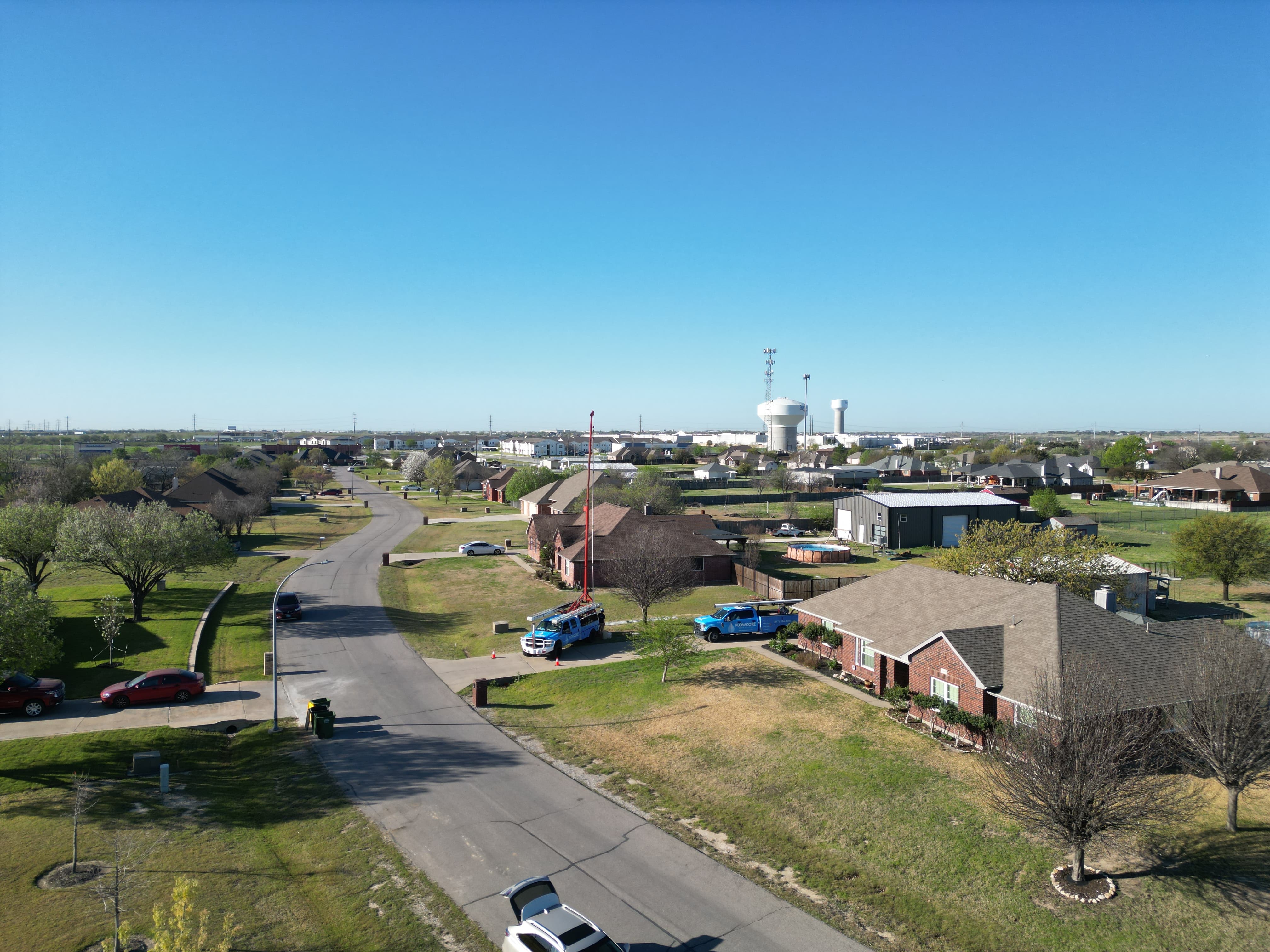
Water well repair pricing varies by what actually failed and how hard it is to reach, and the honest range depends on real factors rather than a flat number. Well depth is the largest single driver, since a deeper well means more pipe, more cable, and more labor to pull and reset the pump. Whether the failure is a component that can be swapped in place, like a pressure switch, or one that requires pulling the pump entirely changes both the time on site and the parts involved.
Access also matters more than most homeowners expect. A wellhead in an open yard is a straightforward job; one buried under a deck addition, inside a finished structure, or on a difficult grade adds time before the actual repair even starts. The clearest way to know what a specific repair will run is a technician on site with eyes on the equipment, which is why Flowcore provides a written estimate before any work begins rather than quoting blind over the phone.
What If You Have No Water Right Now?
No water is not a problem that waits for a normal service window. Same-day and after-hours response, what a callout involves, and how emergency pricing works, are covered in full on our emergency well repair page.
When you call, tell us exactly what you're seeing (no water at all, pressure that drops when a second fixture runs, a breaker that won't stay reset) since that detail helps us bring the right parts on the first visit instead of a second trip.
Is Well Repair Different for Residential and Commercial Properties?
Residential Wells
Most residential calls involve a single-family system serving one house: one pump, one pressure tank, and a straightforward run of pipe between the well and the home. Repairs on residential systems are typically completed in a single visit once the cause is identified, and the priority is getting water restored with minimal disruption to the property.
Commercial and Light Commercial Wells
Commercial and light commercial well service often means higher-capacity pumps, larger pressure tanks, and sometimes multiple wells feeding a shared system. A failure on a commercial well affects more than one household's water use, so diagnosis has to account for demand across the whole property, not just a single point of use, and repairs are scheduled around the operation's actual downtime tolerance rather than a standard residential timeline.
What Happens After Your Well Is Repaired?
A repair isn't finished until the system has been tested under normal operating conditions, not just at the moment the technician leaves. That means checking pressure at multiple fixtures, confirming the pump cycles normally rather than short or long, and, where relevant, retesting water quality if the original complaint involved color, smell, or sediment. For wells with a history of repeat issues, enrolling in Flowcore's maintenance plan catches the early signs of the next problem, like a pressure tank starting to waterlog, before it becomes another no-water call.
Where Does Flowcore Provide Well Repair Service Across North Texas?
Flowcore Water repairs wells across the full Dallas-Fort Worth metro and North Texas, not just the area immediately around our Saginaw and Southlake locations. That coverage runs from the rural well-heavy corridors on the western and northern edges of the metro to the established suburbs closer in, including Fort Worth, Dallas, Denton, Mansfield, and Carrollton, along with the smaller cities and unincorporated areas between them.
Whether you're on a private well that's served a property for decades or one inherited with a home you just bought and know little about, a water well repair service that also handles inspection, rehabilitation, and new drilling under one roof means the technician diagnosing your pump can see the whole picture rather than just the one part in front of them. Call (817) 480-7971 for water well and pump service, or request service online, and we'll get a technician scheduled.
Frequently Asked Questions About Well Repair in North Texas
Answers to the questions North Texas homeowners ask most about well repair, from a water well repair service that works on the pump, the tank, and the well itself.
How quickly can I get a technician out for well repair?
Same-day water well pump service is available across the Flowcore service area for no-water and no-pressure calls, and after-hours dispatch covers situations that can't wait until morning. When you call, describe exactly what the system is doing so the technician can bring the likely parts on the first visit. Response time on a normal repair, rather than a no-water emergency, is typically scheduled within a day or two.
How can I tell if it's the pump or the pressure tank?
Short-cycling, where the pump kicks on and off every few seconds, almost always points to a waterlogged pressure tank rather than the pump. A pump problem more often shows as no water at all, a breaker that trips on startup, or water that runs constantly without ever building pressure. A technician can confirm which it is in one visit with a pressure gauge and an amperage test, rather than guessing and replacing the wrong part first.
Can a failing well pump be repaired, or does it need to be replaced?
It depends on the pump's age and repair history more than the current symptom. A pump under five years old with a single failure is usually a straightforward well pump repair. A pump that's already been repaired more than once in the past two years, or one at or past its typical service life, is a better candidate for replacement, since the next failure is a matter of when, not if.
What does well repair cost, and what affects the price?
Cost depends on well depth, whether the pump has to be pulled, and how accessible the wellhead is, not a flat rate. A pressure switch swap is a small job; a submersible pump replacement on a deep well involves more labor and parts. Flowcore provides a written estimate after a technician has actually seen the equipment, since an accurate number isn't possible over the phone.
Does Flowcore repair commercial and agricultural wells?
Yes. Flowcore provides well pump repair service for commercial properties, agricultural operations, and multi-well sites across North Texas, not just single-family residential systems. Commercial wells often run higher-capacity pumps and larger pressure tanks, and repairs are scheduled around the property's actual downtime tolerance rather than a standard residential timeline.
What if the well itself has failed, not just the pump or tank?
Sometimes the equipment is fine and the well is the problem: declining yield, sediment in the water, or a casing issue that a new pump won't fix. A well inspection identifies whether the well needs rehabilitation rather than another pump replacement. Replacing a pump in a fouled or failing well only delays the repair the well itself actually needs.
Is emergency well repair available after hours?
Yes. No water is treated as an emergency, not a next-available-slot appointment, and after-hours dispatch is available when a system fails outside normal business hours. Call (817) 480-7971 any time water stops entirely or pressure drops to nothing, and we'll get a technician moving.
Get Your Well Working Again Today
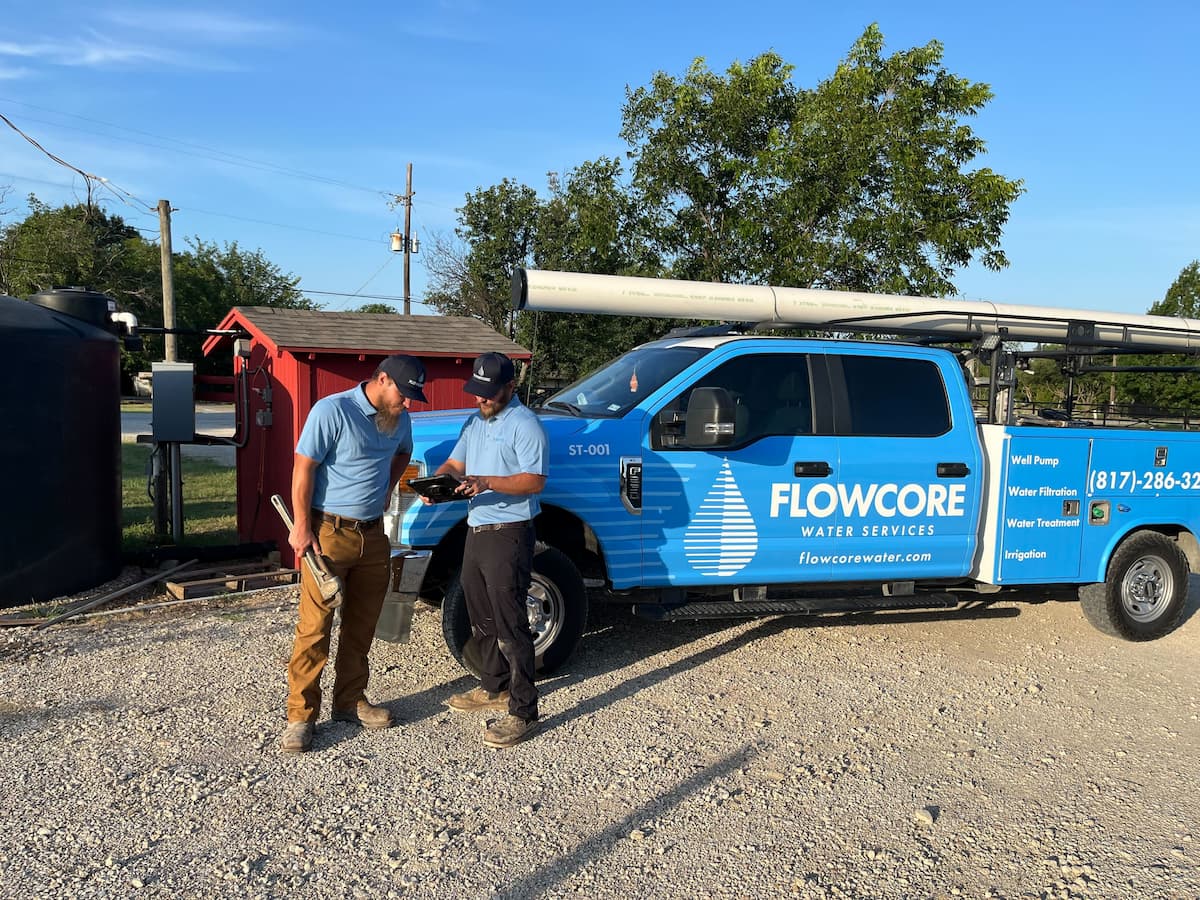
Flowcore Water is the team North Texas homeowners and property managers call when a well stops working the way it should. Licensed, insured, and locally based in Saginaw — we handle everything from diagnosis to repair to follow-up without subcontracting and without four-hour service windows. To get a technician out today, call (817) 480-7971 or schedule service online.
Get Pre-Approved Financing
Flowcore Water partners with Greensky to offer convenient financing options for water well services
Flowcore Water Preferred Customer Membership
Enroll today and enjoy the year-long benefits!