

How Often Should You Have Your Well Serviced? A North Texas Homeowner's Guide
May 30, 2026
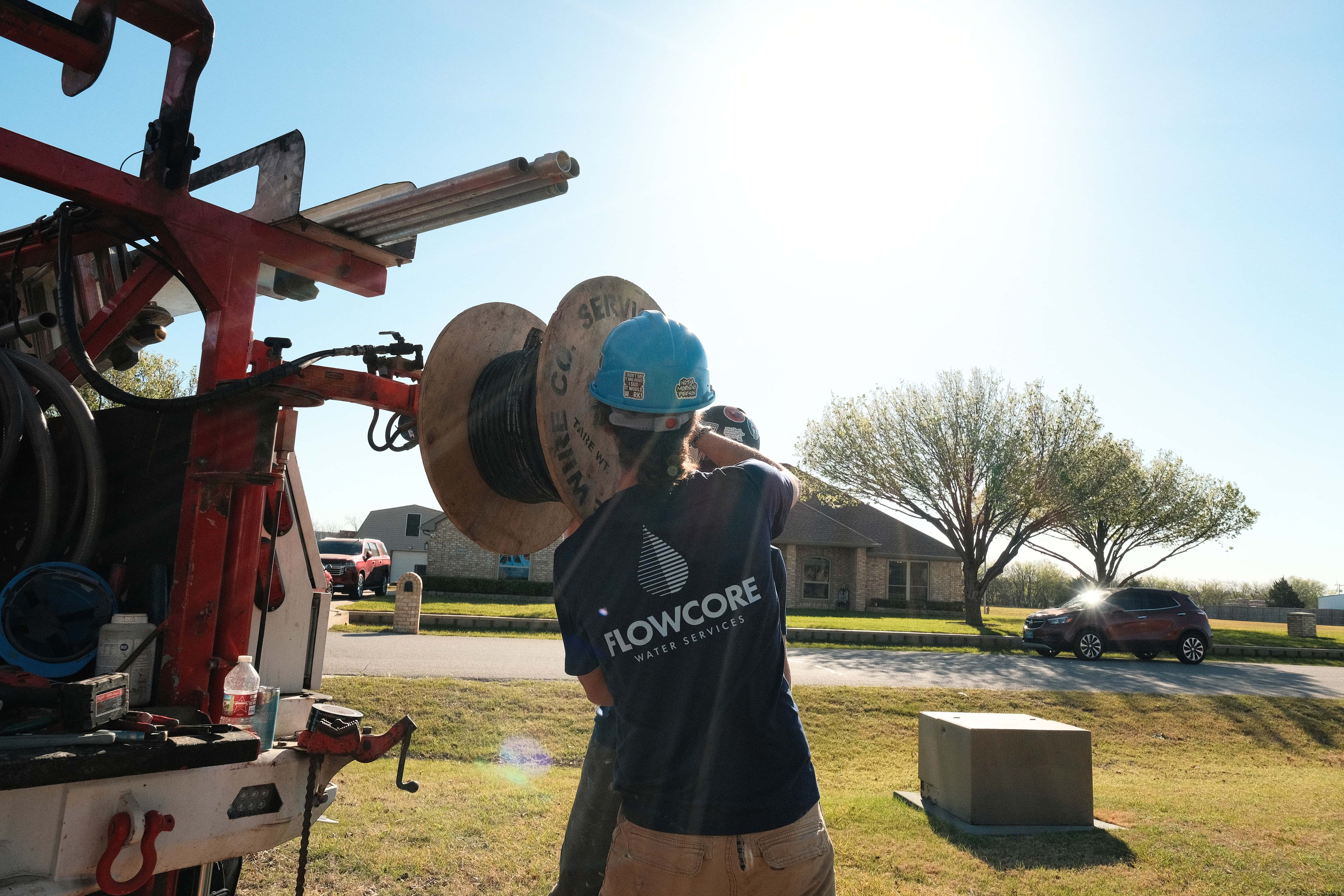
Private well owners in North Texas tend to fall into two groups: those who schedule annual maintenance and call before something breaks, and those who call when the water stops. The second group is far more common — and usually pays more for it. A well system that gets no attention for years doesn't give much warning before a pump motor burns out or a pressure tank fails. By the time you notice something is wrong, the repair is often larger than it needed to be. Well inspection and maintenance on a regular schedule is the straightforward way to avoid that outcome. To schedule a visit with Flowcore, call (817) 480-7971 or schedule service online.
What Does Annual Well Maintenance Actually Cover?
A well system has several components that wear at different rates and fail in different ways. A useful annual inspection addresses each of them, not just the part of the system that's currently showing a symptom.
Flow and pressure testing establishes whether the pump is producing water at the output it's designed for. A pump that's working harder than it should to maintain pressure is already in decline — the flow test catches that before the motor fails. The pressure tank holds a charge that cushions the pump's on/off cycles; a tank with a failed bladder forces the pump to cycle continuously, which shortens motor life significantly. Checking the tank charge is a quick test that catches this early.
The electrical supply to the pump — the control box, wiring, and connections at the wellhead — is worth inspecting annually as well. Corrosion at connections, voltage irregularities, and worn capacitors in the control box are among the more common causes of pump failure in North Texas, and all of them are identifiable before they take the system down.
The wellhead itself — the casing cap and the area immediately around the well — matters too. A cracked or improperly sealed casing cap is a pathway for surface water, insects, and debris to enter the well. In areas where there's any agricultural use nearby, a compromised wellhead is a meaningful contamination risk.
How Often Should a Well Be Inspected in Texas?
The EPA recommends annual inspection and testing for private water wells. That cadence is appropriate for most North Texas properties. Wells on larger irrigated properties, households with higher-than-average water use, or systems with an older pump motor may benefit from check-ins every six months rather than once a year. The annual visit should always include a well water test — mechanical condition and water quality are two different things, and both need attention.
How North Texas Conditions Affect Your Well's Maintenance Schedule
North Texas puts specific stresses on private well systems that aren't present everywhere. Understanding them helps set the right maintenance expectations for this region.
Heat is the primary mechanical stressor. Submersible pump motors run hot under sustained demand, and sustained demand is exactly what happens across a North Texas summer when irrigation systems run daily and household water use climbs. A motor running at the edge of its rated temperature range for weeks at a time accumulates wear faster than the same motor in a milder climate. The hottest months of the year are when motors that are already running at reduced efficiency tend to fail — which is also the worst time to be without water.
Freeze events present a different risk. North Texas has seen significant hard freezes in 2021, 2022, 2024, 2025, and again in early 2026. Above-ground components — pressure tanks in uninsulated well houses, exposed supply lines, pressure switches, and wellhead fittings — are vulnerable when temperatures drop sharply and stay there for multiple days. The damage from a freeze often isn't visible immediately. A slow leak in an exposed fitting or a hairline crack in a pressure tank may not show up for weeks after the freeze. A post-thaw inspection is a reasonable precaution after any hard freeze, even if the system appears to be functioning normally.
Water quality in the Trinity and Woodbine Aquifers — the formations that supply most private wells in North Texas — can also shift. Iron and manganese levels can increase as a well ages or as the pump pulls from deeper in the water column. A water treatment system that was properly sized at installation may need adjustment as the water chemistry changes over time. Annual testing tracks those changes before they cause problems with appliances or plumbing.
PFAS — per- and polyfluoroalkyl substances, sometimes called "forever chemicals" — have also become a growing concern for private well owners across North Texas. In early 2025, Johnson County declared a state of disaster after groundwater testing revealed PFAS contamination at levels far above EPA guidelines, and Fort Worth filed suit against the Department of Defense and chemical manufacturers over PFAS in the city's water supply. Private wells near agricultural land where PFAS-containing biosolids have been applied, or near former military installations, face the highest risk. Because PFAS produce no detectable taste or odor, testing is the only way to know whether levels are elevated. If your well hasn't been tested for PFAS, adding it to the next annual panel is worth considering.
What Happens If You Skip Well Maintenance?
The most common outcome is a pump failure that could have been predicted. A declining pump doesn't usually stop working without warning — it typically shows reduced output, increased cycling, or rising current draw for weeks or months before it fails entirely. Those signals show up on an inspection. Without one, they go unnoticed until the motor burns out. Pump repair or replacement on an emergency basis — often on a weekend in the middle of a Texas summer — is a different conversation than a planned pump replacement identified during a routine visit.
Water quality is the other consequence. Bacteria contamination, elevated nitrates, and changes in mineral content are all conditions that develop gradually and produce no obvious change in water appearance or taste in the early stages. Annual testing is the only reliable way to catch them.
Warning Signs Your Well Needs a Service Call Before the Annual Visit
Annual maintenance catches problems in their early stages, but some conditions develop between visits and are worth acting on immediately rather than waiting for the next scheduled inspection. Reduced water pressure or pressure that fluctuates during normal use is worth a call — it often indicates pump wear or a pressure tank beginning to fail. A pump that cycles on and off noticeably more frequently than it used to is almost always a pressure tank issue or a sign that the pump is working harder than it should. Air sputtering from faucets suggests air is entering the system somewhere it shouldn't be. A change in water taste, odor, or color — particularly a new sulfur or metallic smell, or discoloration — warrants a water quality test regardless of when the last one was done.
None of these symptoms resolve on their own. A system showing any of them benefits from a service call now rather than a closer look at the next annual visit. If the well has been through a rehabilitation in the past — for sediment, iron bacteria, or reduced yield — the recommended follow-up inspection schedule from that service should be followed, which is typically more frequent than once a year for the first couple of years. Flowcore's well rehabilitation work always includes a follow-up recommendation specific to that well's condition.
A Maintenance Plan That Keeps the Well Off Your List of Worries
For North Texas property owners who want well maintenance handled on a consistent schedule without having to track it themselves, Flowcore's maintenance plan is worth reviewing. It covers the annual inspection and testing cadence that keeps a well system in front of problems rather than reacting to them. The visit also creates a service record for the well — useful if you ever sell the property or need to document the system's condition for insurance or regulatory purposes.
Frequently Asked Questions About Well Maintenance in North Texas
How often should a private well be inspected in North Texas?
The EPA recommends at least once a year. In North Texas, that annual cadence is appropriate for most residential properties — the combination of summer heat stress on pump motors and the freeze risk in winter makes skipping a year a meaningful risk. Properties with higher water use, irrigated acreage, or an older pump system may benefit from twice-yearly check-ins. The annual visit should always include a water quality test in addition to the mechanical inspection — the two are not the same thing.
What does a standard well inspection include?
A thorough inspection covers a flow and pressure test, a pressure tank bladder and charge check, an electrical supply inspection at the control box and wellhead connections, a visual check of the wellhead cap and casing integrity, and a water quality test for bacteria, nitrates, and common minerals. The scope may expand based on the well's age, depth, and any symptoms the property owner has noticed. Flowcore documents inspection findings so there's a baseline record for the next visit.
Can I skip maintenance if my water tastes and looks fine?
Not reliably. Bacteria contamination, elevated nitrates, and early pump wear produce no visible or taste-detectable change until they've progressed significantly. A pressure tank losing its charge delivers water normally until the pump begins short-cycling — at which point motor failure can follow quickly. The conditions that annual maintenance catches most reliably are the ones that give no obvious warning before they become failures or health concerns.
What are the first signs that my well needs service before the annual visit?
Reduced or fluctuating pressure, a pump that cycles on and off more frequently than it used to, air sputtering from faucets, and any change in water taste, color, or odor are all worth acting on between scheduled visits. None of these symptoms resolve without intervention, and most of them indicate a condition that will worsen if left alone. Call (817) 480-7971 and describe what you're seeing — Flowcore can advise whether a service call makes sense before the next scheduled inspection.
Does a newer well need the same maintenance schedule as an older one?
Water quality testing should happen annually regardless of how recently the well was drilled — contamination risk isn't related to the well's age. The mechanical inspection is still valuable on newer wells too, because the first few years of operation establish the baseline for what normal looks like on that specific system. Pump wear and pressure tank condition on newer wells are lower-risk than on aging systems, but they're not zero-risk — especially after a significant heat season or freeze event. Annual maintenance on a newer well is also the most reliable way to catch installation issues that weren't obvious at startup.
How does freezing weather affect my well system in North Texas?
Above-ground components — pressure tanks in uninsulated spaces, exposed supply lines, pressure switches, and wellhead fittings — are vulnerable during hard freezes. North Texas has seen significant freeze events in 2021, 2022, 2024, 2025, and early 2026. The damage often isn't visible immediately: a slow leak from a cracked fitting or a hairline fracture in a pressure tank may develop over the weeks following the freeze rather than appearing right away. After any extended hard freeze, a post-thaw inspection is a reasonable precaution even if the system appears to be running normally. Flowcore Water can assess above-ground components and check for damage before it becomes a larger problem.
Flowcore Water provides well inspection and maintenance for private well owners across North Texas and the DFW area. Whether you're overdue for a routine visit, you've noticed something that doesn't seem right, or you want a standing maintenance schedule through our maintenance plan, call (817) 480-7971 or schedule service online.
Get Pre-Approved Financing
Flowcore Water partners with Greensky to offer convenient financing options for water well services
Flowcore Water Preferred Customer Membership
Enroll today and enjoy the year-long benefits!


