

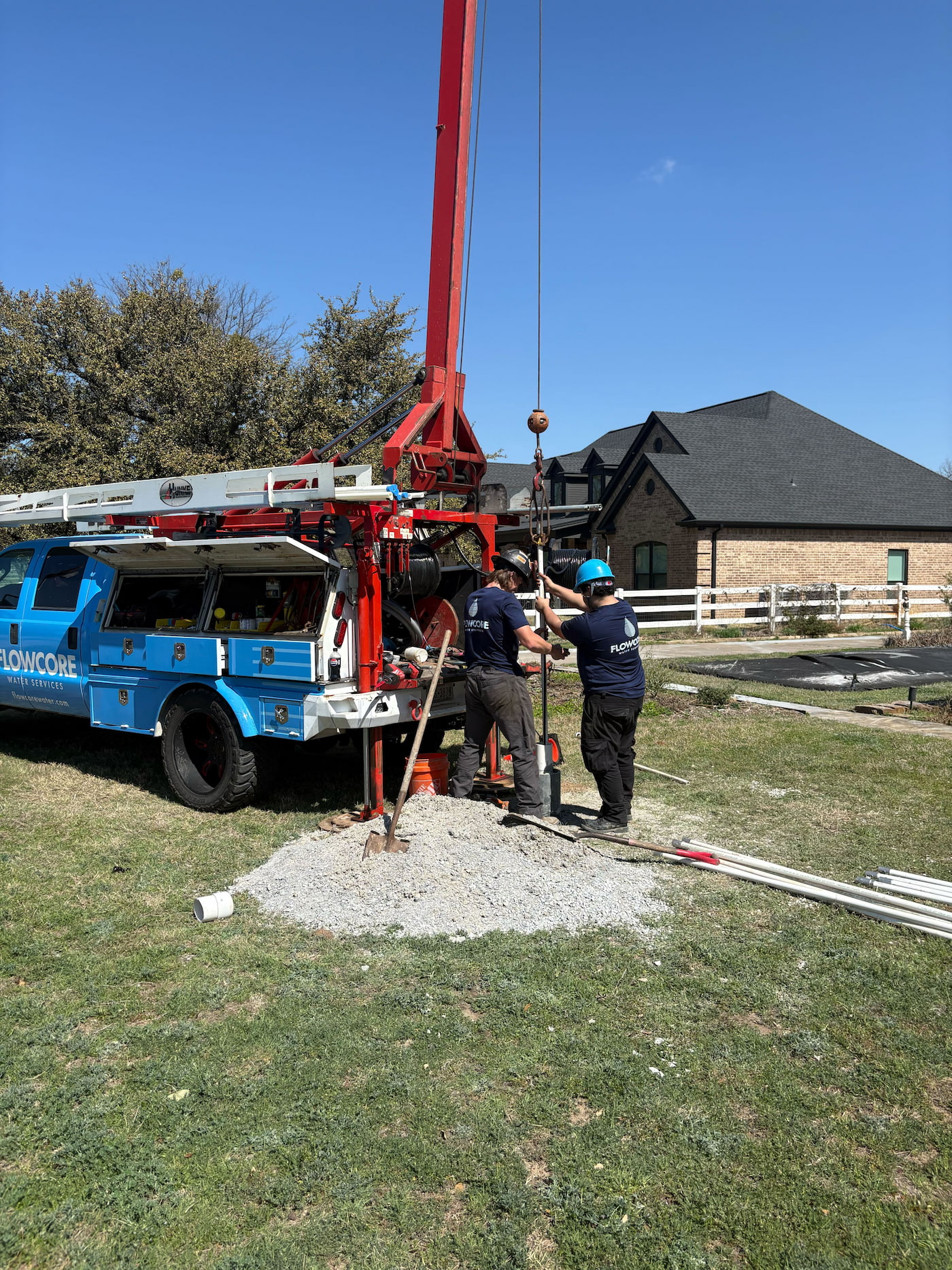
If you are trying to figure out how much it costs to drill a water well in North Texas, the honest answer is that no two wells price out the same. What sits beneath your property — the depth to reliable water, the rock you have to drill through, and the system your household actually needs — sets the number far more than any flat rate. That is also why the most useful thing you can do early is understand what goes into the price, so you can compare proposals on equal footing instead of chasing a single figure. Flowcore Water has been drilling and servicing wells across rural and semi-rural North Texas since 2006, and the same questions come up on nearly every call.
Want a real number for your specific property? Call (817) 480-7971 for a free on-site assessment, or learn more about our water well drilling service.
What's Actually Included When You Drill a Water Well?
When most people picture drilling a well, they picture the borehole. But a working well is a complete system, and the parts that turn a hole in the ground into clean water at your tap are where much of the real value lives. Comparing one driller's "drilling only" figure against another's complete-system proposal is the single most common way homeowners end up confused — or surprised later.
A complete residential water well system in North Texas generally includes the drilling and the steel or PVC casing that keeps the borehole stable and clean, a pump sized to your depth and household demand, and a pressure tank that delivers steady water pressure to the house. It also includes the electrical hookup, pressure switch, and controls, a sanitary well cap and grouting that protect the groundwater and meet state standards, and a water test to confirm the supply is safe before you rely on it. Skip any one of those and the well is not usable, so when you read a proposal, confirm it covers a complete, ready-to-use system. It is also smart to test the water at completion and again on a regular schedule afterward.
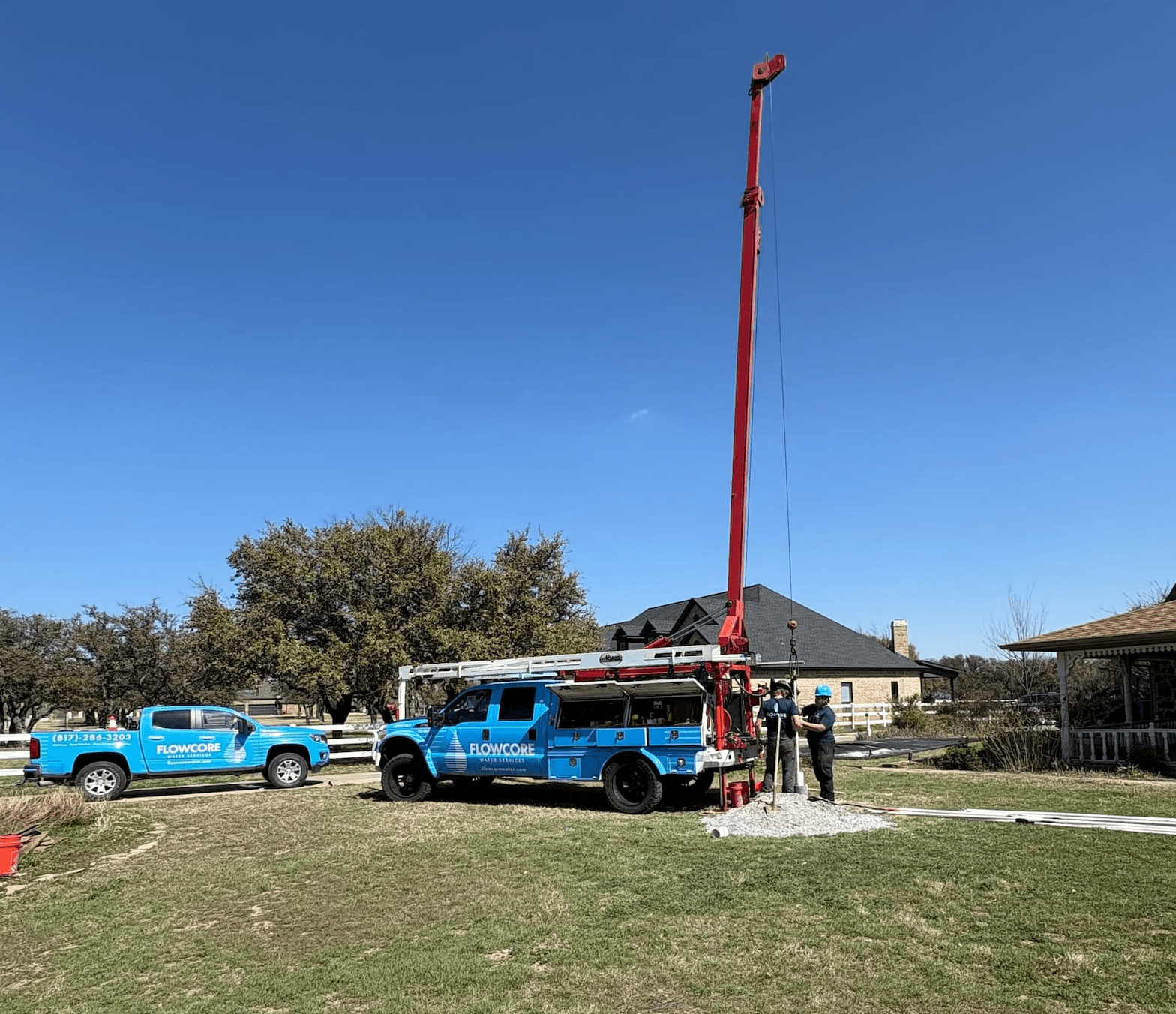
What Are Typical Water Well Costs in North Texas?
Drillers price the borehole itself largely by the foot, and 2026 regional pricing data for North Texas generally puts that figure in the range of about $15 to $30 per foot for the drilling and casing, while broader statewide guides run higher, into the $25 to $58 per foot range for deeper or harder ground. The harder the rock and the deeper the water, the closer to the top of those bands you tend to land. Because depth does so much of the work, the per-foot rate is only part of the story — the complete system is what determines the total.
For a complete, ready-to-use residential system, 2026 cost guides for the Fort Worth area commonly cite a broad range starting around $9,000 to $15,000, while statewide data shows totals more often landing between roughly $6,000 and $30,000 once depth, pump size, and water treatment are factored in. In the harder-rock western counties such as Parker, Hood, and Wise, deeper turnkey installations can climb toward the $20,000 to $30,000 range or beyond. These are general market figures from 2026 industry and regional cost data, not a Flowcore Water quote — your actual number depends entirely on your property's depth, geology, and the system your home needs, which is the reason an on-site assessment is the only way to land on a real price.
One line item that often surprises homeowners is water treatment, which is typically quoted separately from the drilling. Depending on what your water test reveals, 2026 pricing data places treatment systems in a wide band — frequently around $2,000 to $6,000 for many North Texas homes — so a drilling-only figure that looks low may simply leave out the filtration your water actually needs. When you set a budget, it helps to treat the well and the treatment as two related but distinct pieces rather than one number.
What Affects the Cost of Drilling a Well in North Texas?
Five factors do most of the work in shaping any well drilling estimate. Understanding them tells you why a quote for your land may look different from your neighbor's, and where there is room to make choices.
1. Well Depth and the Trinity Aquifer
Because drilling is priced largely by the foot, depth is usually the biggest single factor. Across the DFW region, most residential wells draw from the Trinity Aquifer, which commonly sits somewhere between roughly 350 and 550 feet down, with the broader area ranging from about 300 to 600 feet depending on the property. A shallower well and a deeper one on adjoining lots can differ meaningfully for that reason alone. The depth to reliable water is not something a contractor can promise from the road — it is informed by local well records and experience in your specific pocket of the county.
2. Geology and Ground Conditions
What you drill through matters as much as how far. The Paluxy and other Trinity formations that underlie Hood, Parker, Tarrant, and Wise counties vary considerably in thickness and hardness, and limestone and tight rock are common across the Fort Worth area. Drilling through soft soil and sand is faster than grinding through hard rock, which takes more time, more wear on equipment, and sometimes specialized bits. Tougher ground tends to add to a project; easier ground can ease it.
3. Pump and Pressure System Sizing
A deeper well needs a pump with more lift, and the right pump depends on both your depth and how much water your household uses at peak times. Pump horsepower, the pressure tank size, and the quality of the components all influence the system you end up with. This is worth getting right rather than getting cheap — an undersized pump struggles, and an oversized one wastes energy and cycles hard. Our team handles designing and sizing the pump to the actual well, not a generic default.
4. Water Quality and Treatment
Raw well water in North Texas often carries iron, sulfur, hardness, or sediment, and how your water tests can affect what equipment the system needs. Treatment is generally separate from the drilling itself, and it ranges from simple sediment filtration to more involved iron or sulfur removal. If your goal is water you actually enjoy using, plan to budget attention — not just dollars — to this step. You can read more about the common water quality issues in Texas wells and how whole-house filtration addresses them.
5. Permitting, Reporting, and Site Access
Texas requires that a water well be drilled and a pump installed by a licensed professional, and the driller must file a state Water Well Report with the Texas Water Development Board once the work is finished. Parts of North Texas also fall under a local groundwater conservation district that adds its own registration step. Beyond paperwork, practical site conditions move the number too: a long run from the wellhead to the house, limited access for a drilling rig, or extra trenching can each add modestly to a project.
How Should You Compare Well Drilling Quotes?
Because the parts of a well system vary so much, the proposals you collect are only comparable when they describe the same finished result. The most useful question to ask any driller is what depth they are estimating and why — a number grounded in local well records and county geology is far more reliable than a round figure offered sight unseen. From there, confirm that each proposal spells out the casing, the pump and its sizing, the pressure tank, the electrical and controls, the sanitary well cap, and a water test at completion, rather than leaving those as separate line items you discover later.
It is also worth asking what happens after the rig leaves. Find out whether the company files the required state Water Well Report for you, what warranty covers the workmanship and the pump, and whether water treatment is included or quoted separately so a low drilling figure is not hiding a treatment need on your property. A proposal that puts all of this in writing protects you far more than one that simply lands on an attractive total. When two quotes look different, the gap is usually depth, system quality, or what was left out — not one driller being unreasonable.
Is a Private Well Worth It in North Texas?
For many rural and semi-rural North Texas property owners, the answer is yes. A private well means no monthly water bill, independence from city water restrictions during dry summers, and direct control over your own supply. The upfront investment is real, but a properly drilled and maintained well can serve a property for decades, and routine maintenance plus periodic testing protects that investment over the long haul. If you are weighing the trade-offs, it helps to understand how well water compares to city water for a North Texas household before you commit.
The honest takeaway is that the only accurate cost is the one built for your land. Depth, geology, the system your home needs, and your water chemistry all combine into a figure that a templated online range simply cannot capture. A licensed local driller who knows the Trinity Aquifer and your county's ground conditions can give you a clear, property-specific assessment — and that is the number worth acting on.
Flowcore Water is a veteran-owned and disabled-owned team that has drilled and serviced wells across North Texas since 2006. For a clear, no-pressure estimate built around your property, call (817) 480-7971, explore financing options, or contact us for a free estimate. We serve homeowners throughout NW Tarrant County and beyond from our Saginaw service area.
Frequently Asked Questions About Water Well Drilling Costs in North Texas
What is the average cost to drill a water well in North Texas?
There is no single average, but 2026 regional pricing data generally places complete residential well systems in a broad range — often around $9,000 to $15,000 for the Fort Worth area, and higher statewide or in harder-rock counties where wells run deeper, where totals can reach $20,000 to $30,000 or more. These are general market figures, not a Flowcore Water quote; your actual cost depends on depth, geology, pump sizing, and any water treatment your property needs. A free on-site assessment is the only way to get an accurate number.
How deep do water wells need to be in North Texas?
Most residential wells in the DFW region draw from the Trinity Aquifer, which sits roughly 350 to 550 feet down, though the broader area ranges from about 300 to 600 feet depending on where reliable water is found beneath your land. Because the Paluxy and other Trinity formations vary in thickness across Tarrant, Parker, and Wise counties, two neighboring properties can need very different depths.
Does a well quote include the pump and pressure tank?
A complete water well system is more than the hole in the ground. It includes drilling and casing, the pump, the pressure tank, the electrical hookup and controls, a sanitary well cap and grouting, and a water test before you use it. When you compare proposals, confirm each one covers a complete, ready-to-use system rather than drilling alone.
How long does it take to drill a residential water well?
The drilling itself is usually the shortest part of the project — often a matter of days. Setting the pump, pressure tank, and electrical, then testing the water, adds time before the system is fully ready to use. Hard rock, deeper water, or difficult site access can extend the timeline.
Do I need a permit or a licensed driller to put in a well in Texas?
Yes. Texas law requires that a water well be drilled and a pump installed by a licensed professional, and the driller must file a state Water Well Report with the Texas Water Development Board after the work is complete. Some areas also fall under a local groundwater conservation district with its own registration rules. A licensed local driller handles this paperwork as part of the job.
Are there ongoing costs after a water well is installed?
Yes, but they are generally modest. Plan for periodic water testing, occasional pump or pressure-tank service, and the electricity to run the pump, and expect that a pump will eventually wear out and need replacement after years of service. There is no monthly city water bill, which is a large part of why many North Texas property owners choose a private well, and budgeting for routine maintenance protects the system over the long haul.
Get Pre-Approved Financing
Flowcore Water partners with Greensky to offer convenient financing options for water well services
Flowcore Water Preferred Customer Membership
Enroll today and enjoy the year-long benefits!


