

Water Well Drilling in DFW & North Texas
Texas water well drilling for homes, ranches, and businesses — done right the first time. Since 2006, Flowcore Water Services has drilled shallow and deep wells across North Texas, tapping the Trinity Aquifer to deliver clean, reliable water from 15 to 350 GPM. Licensed, insured, and trusted across the state.
Trusted by North Texas since 2006
Same-day Emergency Service
Financing Available
Skilled & Certified Professionals
TestimonialS
Read our Texas Water Well Drilling Reviews
Drilling a water well in Texas is one of the most important infrastructure decisions a property owner ever makes. The right well delivers decades of clean, independent water. The wrong well — drilled too shallow, in the wrong location, or by a crew that doesn't understand Texas geology — costs tens of thousands of dollars to rework. Flowcore Water has been drilling and servicing water wells across Texas since 2006, and our licensed crews understand the aquifers, soils, and groundwater regulations that make Texas well drilling different from anywhere else in the country.
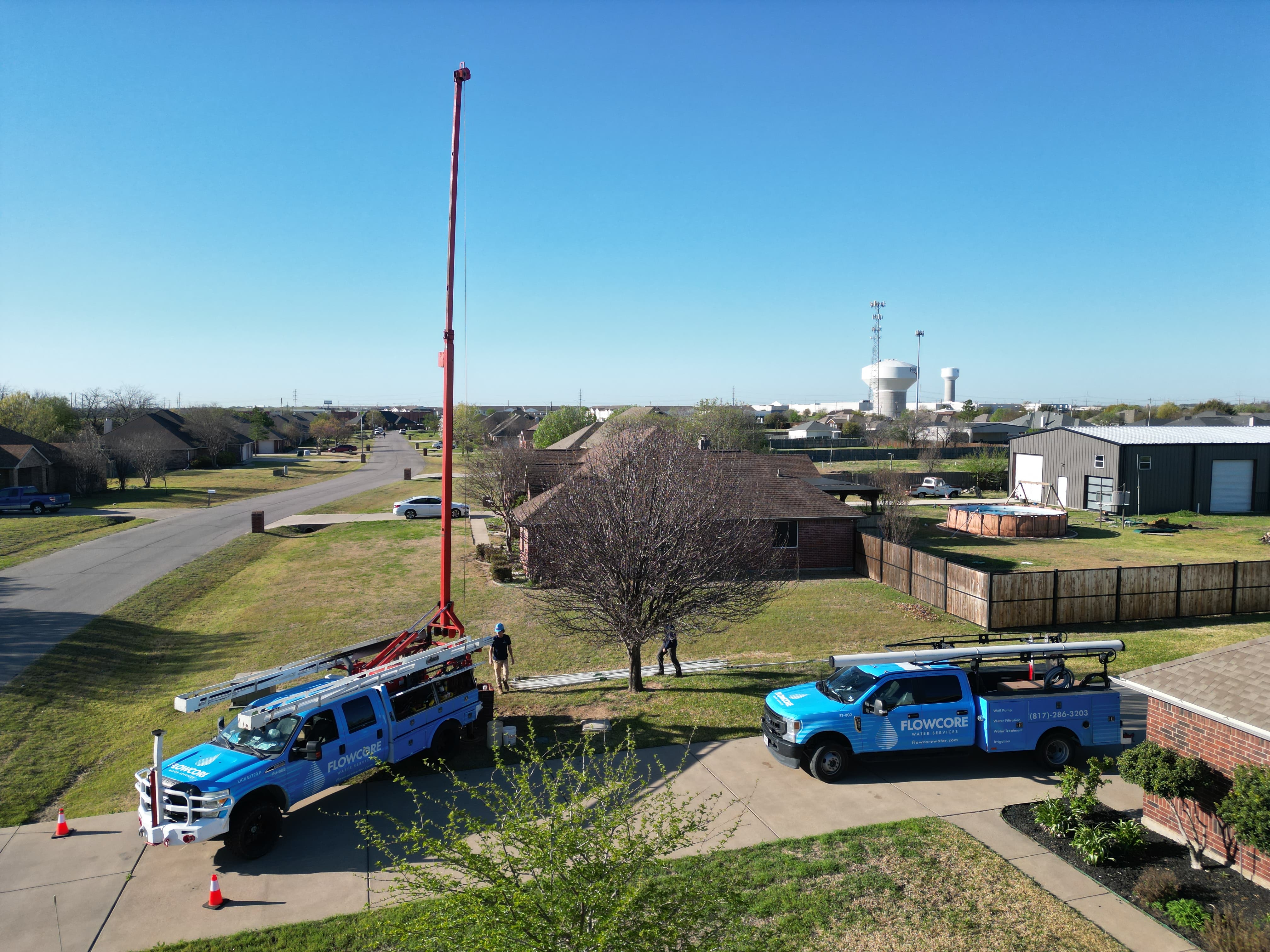
We drill residential, commercial, agricultural, and irrigation wells across North Texas and the greater DFW metroplex — pulling water from the Trinity Aquifer system that supplies most of this region. Whether you're building new on raw land, replacing a failed well, or adding capacity to an existing property, our team handles every step of the project: site evaluation, permit coordination with your local Groundwater Conservation District, drilling, casing, pump installation, water quality testing, and the required state well report.
Ready to drill? Call (817) 480-7971 or schedule a site evaluation online— we'll walk your property and give you a straight answer on what's possible.

Why Texas Water Well Drilling Requires a Texas-Trained Crew
Texas sits on top of nine major aquifers and twenty-one minor ones. The aquifer under your property determines how deep we drill, what casing we use, and what kind of yield you can realistically expect. A crew that drills in East Texas the same way they drill in West Texas will fail in both places. Our team works primarily across the Trinity and Woodbine aquifers that supply North Texas, the Edwards-Trinity system extending toward Central Texas, and the alluvial aquifers along the Brazos and Trinity river corridors.
Beyond geology, Texas has some of the strictest water well construction standards in the country. The Texas Department of Licensing and Regulation governs every licensed water well driller in the state under 16 Texas Administrative Code Chapter 76. We follow those standards on every job — proper casing depth, surface sanitation seal, screen placement, and the State Well Report filed with TDLR within sixty days of completion. If your contractor doesn't talk about any of this, you're hiring the wrong contractor.
Our Water Well Drilling Services Across Texas
Flowcore handles the full range of well projects across our service area, with crews and equipment sized for everything from a small irrigation well on a quarter-acre lot to a high-capacity commercial well for a ranch or production facility.
Residential Water Well Drilling
For homeowners, a properly drilled well provides clean, soft, independent water for the life of the property. Our residential wells are typically drilled to depths of 200 to 600 feet across North Texas, depending on the local water table and the formation we're targeting. Every residential well includes pressure-tested steel or PVC casing, a sanitary surface seal, and a complete pump and pressure tank installation. We also handle the water quality testing required for new residential wells and provide guidance on filtration if your raw water needs treatment.
Commercial and Agricultural Well Drilling
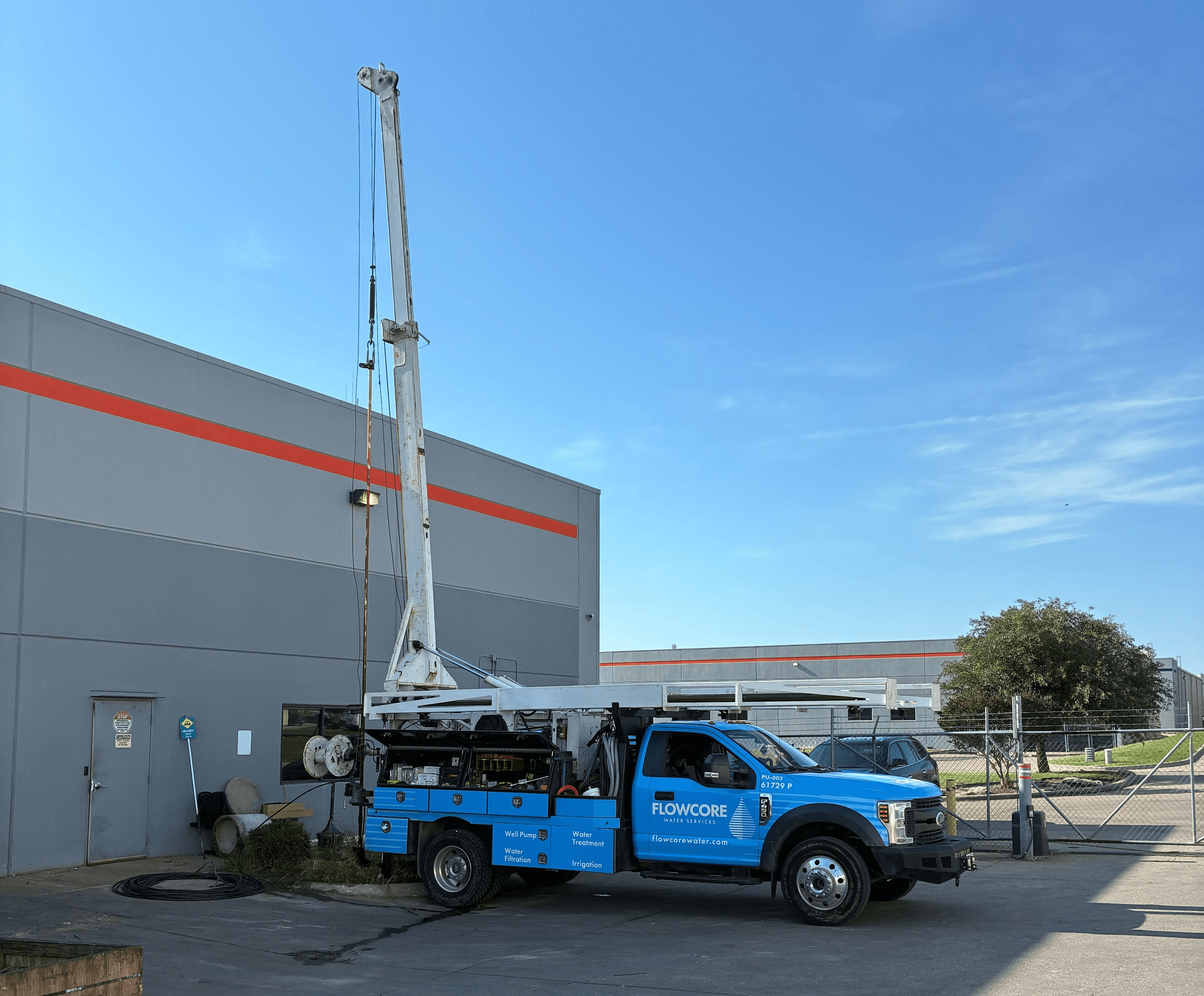
Commercial wells require larger casing diameters, higher-capacity pumps, and tighter compliance with state and county regulations. We drill commercial wells for ranches, farms, light industrial sites, car washes, equine facilities, and HOA-managed irrigation systems across Texas. These wells typically run 400 to 800 feet deep with 6–8 inch steel casing, capable of producing 50 to 350 gallons per minute depending on the formation. Every commercial project includes coordination with your local Groundwater Conservation District for production permits where required.
Irrigation and Shallow Well Drilling
Not every project needs a deep, drinking-water-grade well. For irrigation, livestock, or supplemental water use, a shallow well drilled to 60–220 feet is often the most efficient option. These wells are faster to drill, less expensive to complete, and ideal for properties that already have municipal water for indoor use but want independent water for landscaping, gardens, or animals.
Well Rehabilitation and Deepening
If you already have a well that's lost production, gone dry, or has water quality issues, drilling a brand new well isn't always the answer. We rehabilitate existing wells through redevelopment, acid treatment, and screen cleaning. When the formation has dropped, we can also deepen an existing well — extending the casing and screen into a lower-producing zone rather than abandoning the original investment. Learn more about our well rehabilitation services.
How Much Does It Cost to Drill a Water Well in Texas?
Water well drilling costs in Texas vary based on three factors: depth, casing material and diameter, and the geological conditions under your property. A shallow irrigation well at 100 feet costs a fraction of a 600-foot residential well in a hard-rock formation. Pump size, pressure tank, water quality testing, and the surface completion all add to the total. Rather than quote a generic per-foot rate that won't match your project, we provide a fixed-price proposal after a site evaluation. We bring our drill log data from neighboring wells we've completed in your area so the estimate reflects what we actually expect to encounter — not a guess.
How Long Does It Take to Drill a Water Well in Texas?
Most residential water wells in Texas are drilled in two to five days once we're on site. Shallow irrigation wells often finish in a single day. Deep commercial or hard-rock wells can take seven to fourteen days, and high-capacity wells in difficult formations occasionally run longer. The longer timeline isn't typically the drilling itself — it's the permits and the wait for the right crew and rig to be free. Lead time from contract signing to drill day is usually two to six weeks depending on the season. Spring and early summer book out fastest.
How Deep Should a Water Well Be in Texas?
Texas well depth depends entirely on the aquifer under your property. In most of the DFW metroplex, productive Trinity Aquifer wells run 300 to 700 feet. Closer to East Texas, shallower alluvial wells at 100 to 300 feet are common. In parts of West Texas and the Hill Country, wells can run 800 feet or deeper. Drilling deeper than necessary wastes money. Drilling too shallow leaves you with a well that goes dry in drought years. Our site evaluation includes pulling neighboring well logs from the TDLR Submitted Drillers Reports database, so we know what depth has produced reliable water within a few miles of your property before we ever set the rig.
Do I Need a Permit to Drill a Water Well in Texas?
It depends on the county. Texas does not have a statewide well permit, but most counties fall under a Groundwater Conservation District that requires a drilling permit and, for higher-volume wells, a production permit. In the DFW area, Northern Trinity Groundwater Conservation District and Upper Trinity Groundwater Conservation District cover most of the counties we serve. Our team handles the permit coordination on every project — pulling the application, submitting drill plans, and filing the required State Well Report with TDLR within sixty days of completion. You don't have to learn the paperwork; we do this every week.
Our Water Well Drilling Process
Every Flowcore drilling project follows the same proven sequence. Skipping steps is how wells fail early.
Site evaluation — we walk the property, review neighboring well logs from TDLR records, identify the target aquifer, and confirm the best drill location based on access, formation, and setback distances from septic and property lines.
Permit coordination — we file the drilling permit with your local Groundwater Conservation District and coordinate any setback variances or production permits required for higher-volume wells.
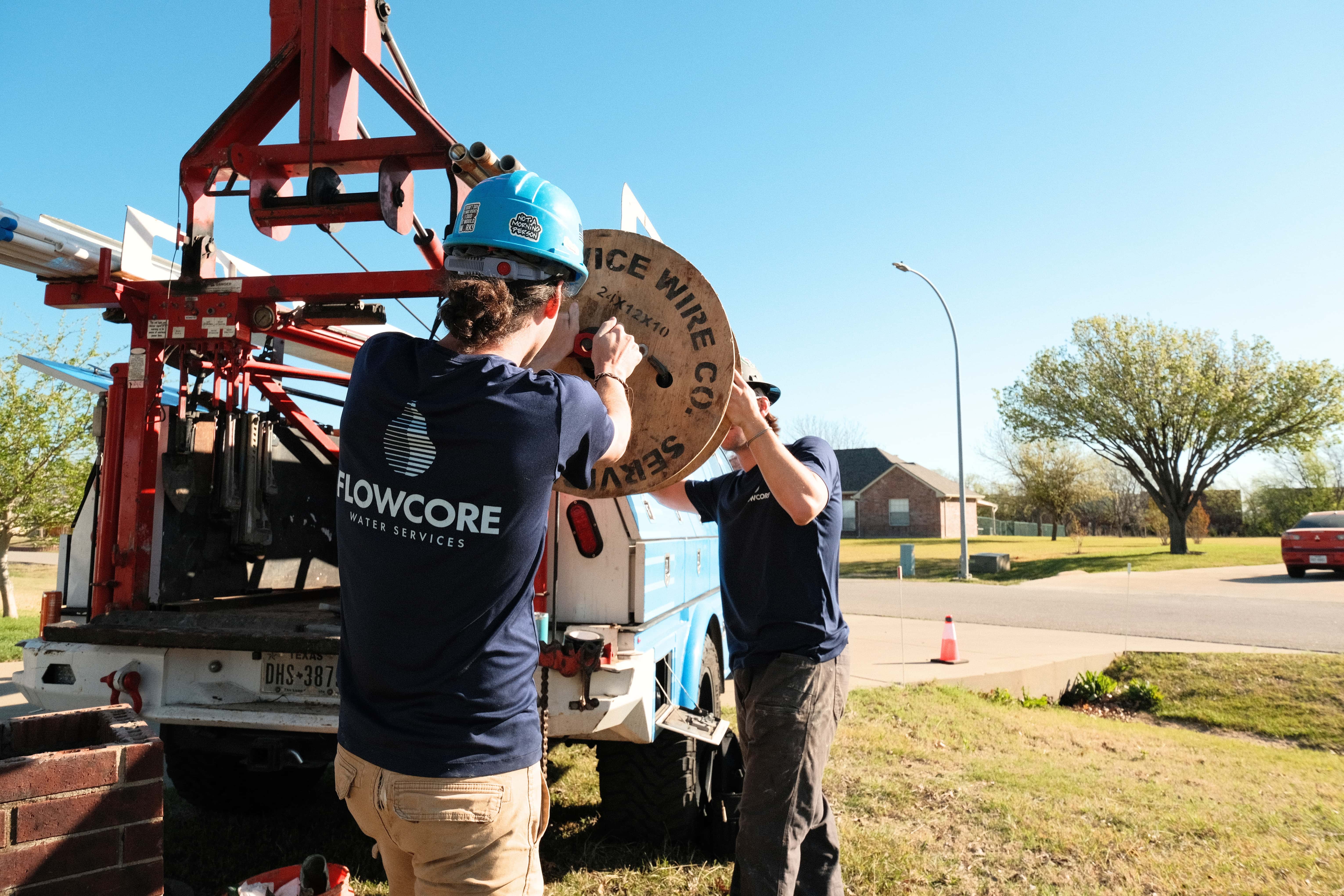
Drilling — our rigs drill to the target depth, taking continuous formation samples so we can confirm we've reached productive water-bearing strata before setting casing.
Casing and screen — we set pressure-tested casing, place screen at the producing zone, and install the surface sanitary seal required by 16 TAC Chapter 76.
Development and pump installation — we develop the well to clear fines, then install a properly sized pump and pressure tank matched to the well's tested yield.
Water quality testing and filtration — we pull a baseline water sample for bacteriological and chemical analysis, and recommend filtration if the raw water needs treatment.
State Well Report filing — we file the required report with TDLR within sixty days, and you receive a copy for your records and any future real estate transactions.
Service Areas Across Texas
Flowcore drills water wells across the entire DFW metroplex and the greater North Texas region. Our most common service areas include Fort Worth, Dallas, Denton, Frisco, Mansfield, and dozens of surrounding cities. If you're outside North Texas, contact us and we'll either schedule the project directly or refer you to a licensed Texas driller we trust in your area.
Why Texas Property Owners Choose Flowcore for Well Drilling
We've been drilling water wells across Texas since 2006. Every crew member is licensed under the Texas Department of Licensing and Regulation. We follow 16 TAC Chapter 76 on every job, file every State Well Report, and stand behind every well we drill with a clear written warranty. We don't subcontract. The crew that drills your well is on Flowcore's payroll. That matters because well drilling problems are slow to show up — sometimes years later — and you need a contractor who's still going to be in business when they do.
We also handle the full water system after the well is drilled. Pump replacement, inspection and maintenance, water treatment, filtration, and emergency repair — one company, one phone number, one set of records on your well for as long as you own the property. Financing is available on every project through our GreenSky partnership.
Frequently Asked Questions About Water Well Drilling in Texas
How long does a drilled water well last in Texas?
A properly drilled and maintained Texas water well typically produces reliable water for 30 to 50 years, sometimes longer. Wells fail not from age but from poor original construction, pump wear, or formation changes. Annual inspections and routine pump service extend well life significantly.
Can I drill my own water well in Texas?
Texas law allows a property owner to drill a well on their own land for domestic use without a TDLR license, but the well still has to meet 16 TAC Chapter 76 construction standards, may require a Groundwater Conservation District permit, and requires a filed State Well Report. In practice, almost every property owner hires a licensed driller because the equipment, permits, and compliance work make DIY impractical for anything deeper than a shallow hand-dug well.
What is the Trinity Aquifer and is my well drawing from it?
The Trinity Aquifer is the primary groundwater source for most of North Texas, including the DFW metroplex. It's actually a system of three layered formations — the Paluxy, Glen Rose, and Twin Mountains — that together stretch from the Red River south to the Hill Country. Most residential wells in our service area draw from the Trinity. We confirm the target formation during site evaluation by pulling neighboring well logs from TDLR records.
Do you handle the permits and state well report?
Yes. Flowcore files all required Groundwater Conservation District permits before drilling and submits the State Well Report to the Texas Department of Licensing and Regulation within sixty days of well completion. You receive a copy for your records and for any future real estate transactions.
What's the difference between a shallow well and a deep well in Texas?
Shallow wells in Texas are typically 60 to 220 feet deep and pull from near-surface alluvial aquifers. They're well suited for irrigation, livestock, and supplemental water use. Deep wells run 300 to 800 feet or more and pull from confined aquifers like the Trinity. Deep wells produce cleaner, more reliable water and are required for primary residential drinking water in most of our service area.
How do I know if my property is a good candidate for a water well?
Three things determine whether a well makes sense on your property: the aquifer under you, the production history of neighboring wells, and the setback distance from septic systems and property lines. Our site evaluation answers all three. If the formation under your property won't reliably produce water, we'll tell you before you sign a contract — not after.
Schedule Water Well Drilling in Texas
If you're ready to drill a water well in Texas, the first step is a site evaluation. We'll walk the property, review neighboring well data from TDLR records, and give you a fixed-price proposal with a clear timeline. Call (817) 480-7971 to schedule, or request an appointment online. For ongoing service on an existing well, visit our water well services hub.
Get Pre-Approved Financing
Flowcore Water partners with Greensky to offer convenient financing options for water well services
Flowcore Water Preferred Customer Membership
Enroll today and enjoy the year-long benefits!