


Your well pump runs fine for a while, then shuts off on its own. You walk out to the garage, flip the breaker back on, and the water comes right back, until it happens again an hour later, or the next time someone runs the shower and the sprinklers at once. If that's the pattern you're living with, you're not dealing with something rare. It's one of the most common electrical complaints well owners across North Texas bring to a service call, and it almost always traces back to one of a small number of causes, some minor and some worth stopping and addressing before you flip that breaker again.
Dealing with a pump that keeps tripping or shutting off on its own? Call (817) 480-7971 and Flowcore's well repair technicians can test the actual amp draw and wiring at the control box, not just guess from the symptom.
Why Does My Well Pump Keep Shutting Off and Tripping the Breaker?
A breaker tripping is a safety device doing its job: it's cutting power because something in the circuit is drawing more current than it should, or a short is occurring somewhere in the system. The question is which of a handful of components is actually causing that. In order of how often each shows up in real service calls, here's what's usually behind it.
A worn or sticking pressure switch
The pressure switch tells the pump when to turn on and off based on tank pressure. When its contacts wear down or start sticking, it can cause electrical arcing and overheating at the switch itself, which the breaker responds to by tripping as a protective measure. This is one of the more affordable fixes on this list, and one of the most common.
A failing or mismatched capacitor
The capacitor gives the pump motor the extra push it needs to start. A failing capacitor is behind a large share of pump electrical failures industry-wide, and it can cause a breaker trip on its own. It can also fail because it was never matched correctly to the motor's specifications in the first place, in which case it will keep overheating and failing again even after a straight swap.
Water intrusion into the control box or wiring
Moisture reaching the control box, whether from a housing leak, a cracked wire jacket, or condensation, can short-circuit components inside and trip the breaker as a direct safety response. This one tends to show up more after heavy rain or if a control box wasn't sealed properly during a previous repair.
A waterlogged pressure tank forcing rapid cycling
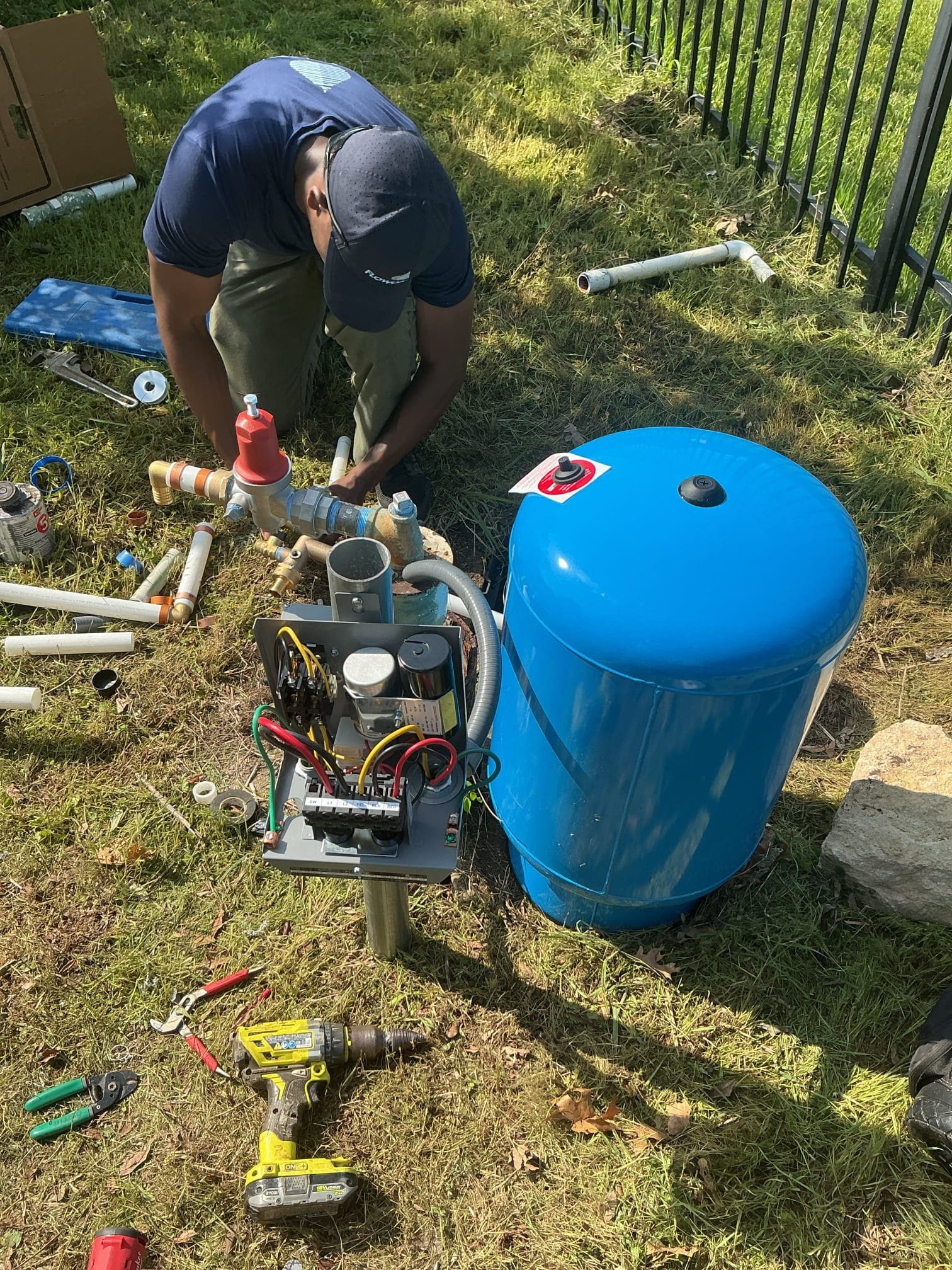
When a pressure tank loses its air charge, the pump ends up turning on and off far more often than it should, sometimes every minute or two under normal water use. That rapid cycling puts stress on the motor and its electrical components that they weren't built to handle continuously, and a breaker trip can follow.
Motor overload from a failing pump or a low-yielding well
If the motor itself is drawing more amperage than normal, whether from worn bearings, a failing winding, or a well that can't keep up with the pump's demand, the control panel's overload protection will shut it down before it burns out. This is the cause most likely to show up as an actual "overload" message on a control panel rather than a silent breaker trip.
What Does a "Motor Overload" Message on My Well Pump Actually Mean?
Modern well pump control panels often display a specific fault code rather than just tripping silently, and "overload" or "motor overload" is one of the most common. It means the panel's protection circuit measured the motor pulling more current than its rated load and shut it down before that extra heat could damage the windings permanently. It's a symptom, not a diagnosis. The overload can be triggered by a capacitor that's failing under load, a mechanical bind slowing the pump down, wiring resistance from a damaged connection, or the pump simply working harder than it was sized for because the well's water level has dropped. Clearing the fault and having the pump run for a while before it happens again is a strong signal that the root cause hasn't actually been fixed yet, even though the pump appears to be working in between faults.
Why Does My Well Pump Only Run for a Few Minutes Before It Stops?
A pump that runs for a short window and then cuts out, rather than tripping immediately on startup, is usually building up to a heat- or pressure-related shutoff rather than experiencing an instant short. A waterlogged pressure tank causes this by making the pump cycle on and off far more frequently than a healthy tank would allow. A motor nearing the end of its life can run for a few minutes before its overload protection catches up with rising amperage. And a well that's drawing down faster than it recharges can cause the pump to briefly run dry or nearly dry, which spikes amp draw and trips the overload protection well before the motor itself is damaged, if it's caught in time. Timing the pattern, does it trip in seconds, in minutes, or only under heavy household demand, is one of the most useful pieces of information you can give a technician before they even arrive.
If your main complaint is weak water pressure rather than the pump cutting off completely, the cause list looks a little different. See Flowcore's guide on why well water pressure runs low for that specific symptom.
Is a Well Pump That Keeps Tripping the Breaker Dangerous, or Just Annoying?
It depends on the pattern. A breaker that trips occasionally, and stays on for a good stretch after being reset, is inconvenient but not usually an emergency by itself, though it does mean something needs attention before it gets worse. A breaker that trips again immediately, within seconds of being reset, is a different situation. That pattern points to a short circuit in the motor or wiring, and repeatedly resetting it is a recognized fire risk rather than a harmless workaround. If you're seeing the second pattern, the safer move is to leave the breaker off and the pump powered down until it's been inspected, even if that means going without water from the well for a day.
What Should Happen During a Diagnostic Visit for This Problem?
Because so many different components can cause the same symptom, a useful diagnostic visit checks the electrical side and the mechanical side together rather than guessing from the description alone. That typically means testing amp draw at the control box while the pump is running, inspecting the capacitor for bulging, leaking, or burn marks, checking the pressure switch and tank air charge, and looking for signs of moisture or damage in the wiring. If the pump has stopped producing water entirely rather than just tripping intermittently, the triage is a little different. See no water from your well: pump, tank, or pipe for that scenario.
In some cases, the electrical fault turns out to be the smaller problem, and the real question becomes whether the pump itself is worth repairing at all. Flowcore's comparison of well pump repair versus replacement walks through how that decision gets made once a technician knows what's actually failing.
Frequently Asked Questions About a Well Pump That Keeps Tripping or Shutting Off
Why does my well pump shut off and then start again after I flip the breaker?
When resetting the breaker brings the pump right back and it runs fine for a while, that points to something tripping the breaker as a protective response rather than a wiring short that fails immediately. Common causes include a worn or sticking pressure switch, a failing capacitor, a waterlogged pressure tank, or the motor pulling more amperage than normal. Repeated resets that keep working are still worth having diagnosed, since the underlying cause typically gets worse, not better, on its own.
What does a "motor overload" fault on my well pump control panel mean?
An overload fault means the control panel detected the motor drawing more current than it should and shut it down to protect the windings from overheating. It's a safety response, not the failure itself. It can be triggered by a failing capacitor, a pump working harder because the well level has dropped, a mechanical bind, or damaged wiring. Clearing the fault and having it happen again shortly after means the underlying cause hasn't been addressed.
Why does my pump only trip when water is running, like in the shower or sprinklers?
A pump that trips specifically under load is often struggling to keep up with demand. That can mean a worn impeller or bearing, a well water level lower than the pump was sized for, or a capacitor failing under sustained running rather than a quick start-stop cycle. A technician can measure actual amp draw while the pump runs under load to see which of these is happening.
Is it safe to keep resetting the breaker myself?
Resetting a breaker once or twice while you wait for a technician is common, but a breaker that trips again immediately after being reset can indicate a short circuit, and repeatedly forcing it back on is a recognized fire risk. If the trip is immediate and repeatable, leave the breaker off and the pump powered down until it's inspected.
Could this mean my well is running low on water?
It's possible. A pump pulling from a well with a dropping water level can end up working outside its normal range, drawing more amperage and running hotter than designed, which can trigger an overload fault even before the pump itself is damaged. It's worth having both the well's water level and the pump's electrical draw checked together rather than assuming either one on its own.
How much does it cost to diagnose and fix a pump that keeps tripping?
Cost depends entirely on which cause is behind it, since a pressure switch or capacitor replacement is a very different job from a full pump replacement.
If your pump is tripping the breaker or shutting off on its own, waiting rarely makes the underlying cause less expensive to fix. Call (817) 480-7971 or schedule a diagnostic visit online, and see Flowcore's customer reviews for how past electrical and pump repairs have gone. Flowcore also partners with GreenSky to offer financing options for larger repairs, and homeowners who want to catch problems like this before they become a full shutoff can ask about the Preferred Customer Membership.
Get Pre-Approved Financing
Flowcore Water partners with Greensky to offer convenient financing options for water well services
Flowcore Water Preferred Customer Membership
Enroll today and enjoy the year-long benefits!


