

Iron Bacteria in North Texas Well Water: What It Is, the Damage It Does, and the Rehab Process That Actually Fixes It
May 12, 2026
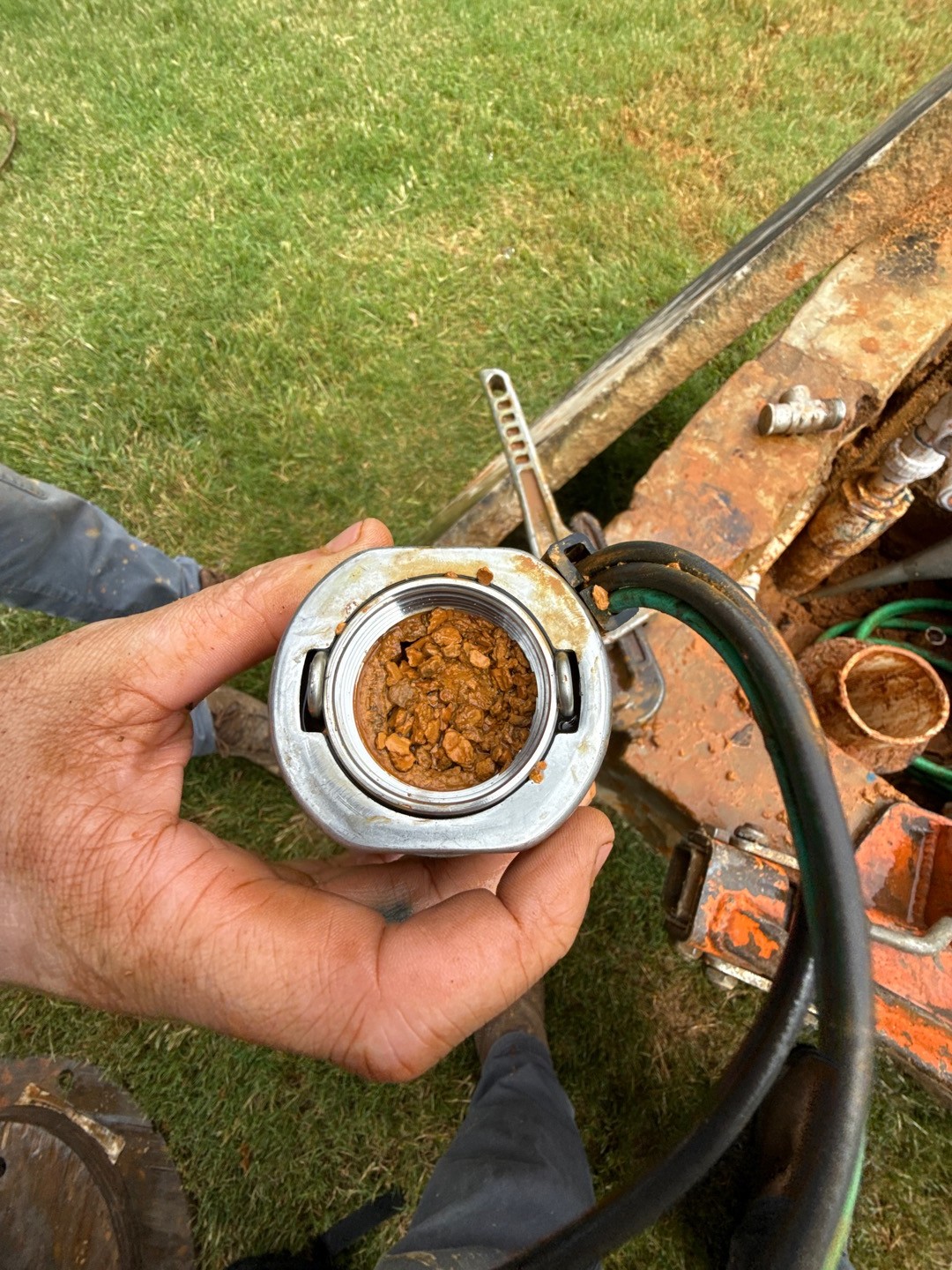
Most North Texas homeowners on a private well don't recognize iron bacteria when it first shows up. They see a faint orange ring in the toilet tank, blame it on hard water, and move on. Six months later the pump is short-cycling, the laundry has rust streaks, and a sulfur smell drifts out of the tap on Monday morning after a quiet weekend.
By the time anyone calls a well company, the bacteria has already plated the inside of the pressure tank, fouled the pump intake, and started eating away at copper and steel. Iron bacteria is the most under-diagnosed water quality problem we see on private wells across Grapevine, Southlake, Colleyville, and the rural fringe of NE DFW — and it's almost always fixable when it's caught and rehabbed correctly.
If your well is showing any of the signs in this guide, call (817) 480-7971 to request well inspection, or schedule an inspection online.
What Does Iron Bacteria Look Like in Well Water?
Iron bacteria is a category of naturally occurring microorganisms that feed on dissolved iron and manganese. They're already in most groundwater at low levels — the problem starts when the conditions inside a well let them bloom. The visible signs are different from plain mineral staining, and once you know what to look for, the call gets easier to make.
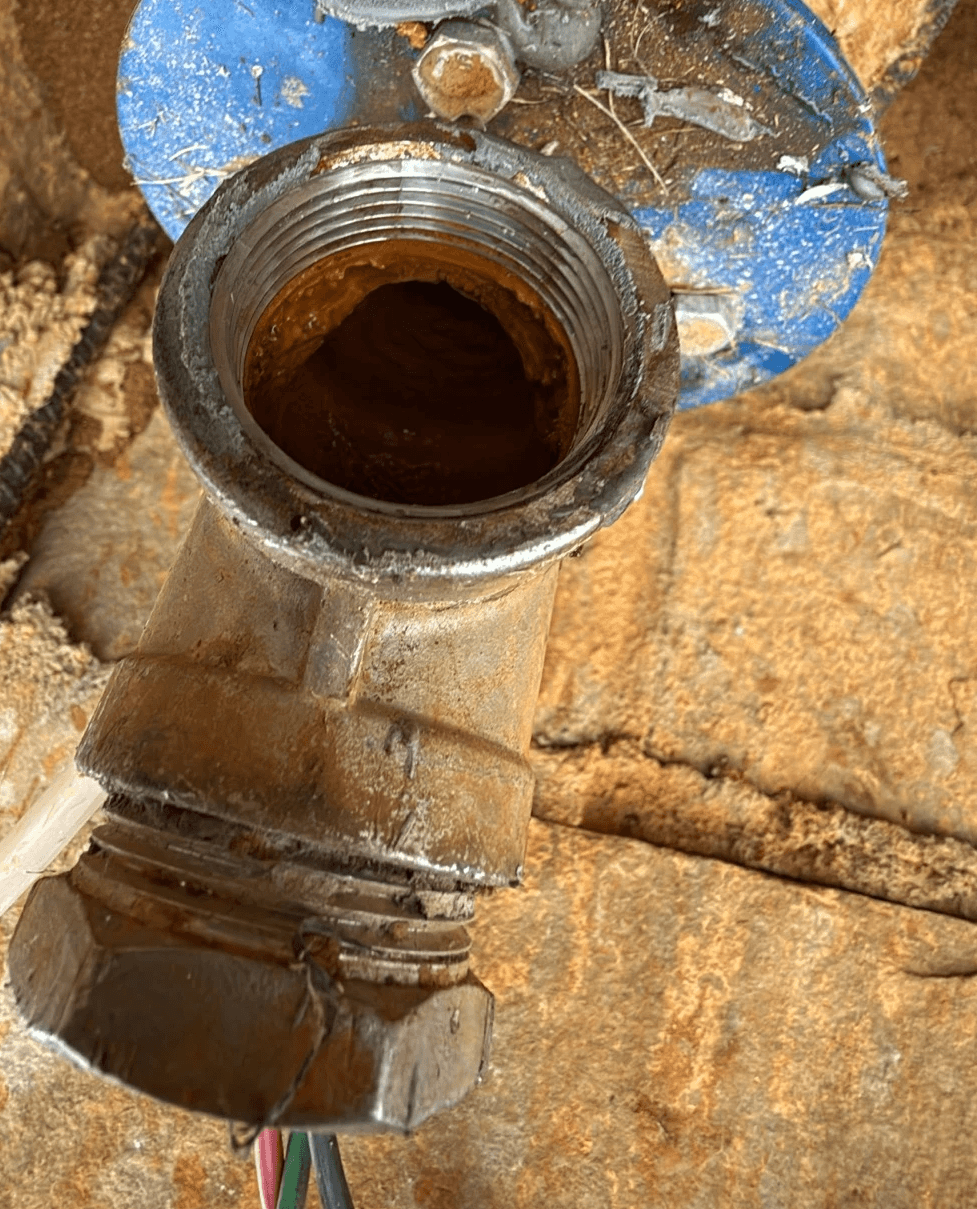
Plain iron in well water shows up as flat orange or rust staining on fixtures, dishes, and laundry. Iron bacteria looks different. It produces a slimy, almost gel-like buildup — often reddish-brown, sometimes greenish or yellow — that clings to the inside of toilet tanks, the underside of toilet lids, the inside walls of pressure tanks, and the well casing itself. When a tech pulls a submersible pump out of an iron-bacteria-affected well, the discharge pipe and the pump intake often come up coated in slime that rinses off in chunks, not a uniform stain.
The other tell is smell. A sulfur or rotten-egg odor that appears or worsens after the water has sat unused — like after a weekend away — is a strong indicator. Iron bacteria thrives in oxygen-poor environments, and when water sits stagnant in the casing, the bacteria's metabolism produces hydrogen sulfide. Run the tap Monday morning after a quiet weekend and the smell tells you what the inside of the well looks like. Plain iron, by itself, doesn't typically smell.
Why Iron Bacteria Wrecks Pumps, Pressure Tanks, and Plumbing
The damage is gradual, then sudden. As iron bacteria colonies build up inside the well casing and on the pump intake, two things happen at the same time. The biofilm narrows the effective opening of every passage water has to travel through, which restricts flow and starves fixtures of pressure. And the same biofilm creates a low-oxygen layer against metal surfaces, which accelerates pitting corrosion of the pump body, the discharge pipe, the well seal hardware, and the pressure tank fittings.
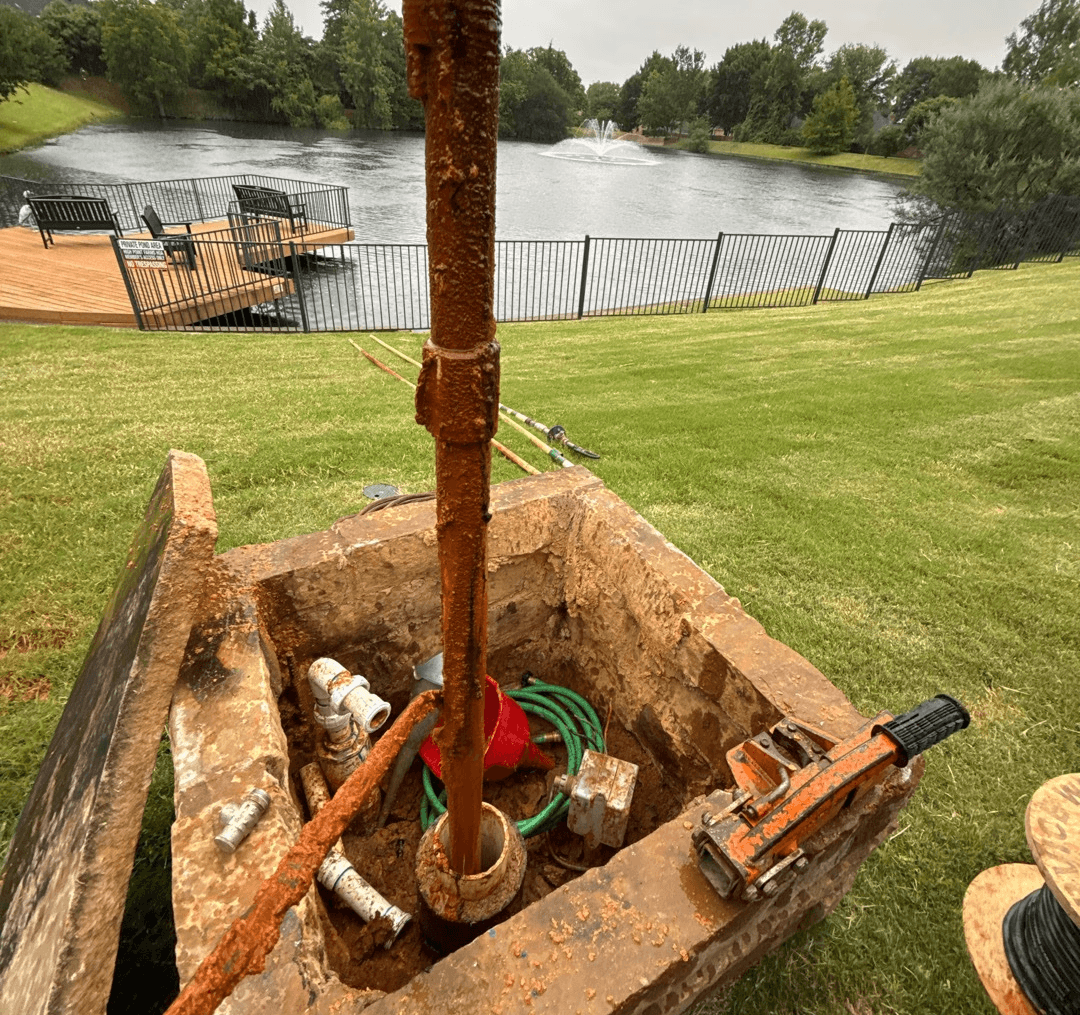
The most common downstream failure pattern in NE DFW is a pressure tank with a waterlogged or perforated bladder, paired with a pump motor that's burning out from short-cycling. The bladder fails because iron deposits accumulate on the rubber and chew through the membrane. The pump short-cycles because the failed bladder can no longer absorb pressure swings, so the pressure switch trips on and off every 30 to 60 seconds. Each cycle puts heat into the motor windings, and on a single-phase 1 HP or 1.5 HP residential pump, that's the failure clock running. Homeowners often replace the pump assuming the pump itself failed — without rehabbing the well — and the new pump fails again within a year. We've seen this loop two and three times on the same property before someone calls a different well company for a real diagnosis.
Iron bacteria also fouls every downstream filter, every appliance with a fill valve, and the inside of any tankless water heater. Sediment filters that should last six months get plugged in three weeks. Dishwashers and ice makers leave rust deposits. The damage is rarely confined to the well — by the time it's visible at the tap, the system has been seeded.
A Real Well Rehab Case Study from Grapevine, TX
The job that prompted this article was a private well system on Lakeside Court, Grapevine, TX 76051. The homeowner had been dealing with falling water pressure, intermittent rust staining, and a pump that had been replaced once in the previous two years. By the time our crew was on-site, iron bacteria slime was visible inside the pressure tank, the existing pump was struggling, and water flow at the fixtures had dropped enough that the irrigation system was misting instead of spraying. Here's the three-step process we ran to fix it for good.
1. Chlorine Shock and Whole-System Flush
Step one is to break the bacterial colony loose. The crew dosed the well casing with a calculated chlorine concentration appropriate for the well depth and water column, then circulated the chlorine through the casing, the discharge piping, the pressure tank, the home's water heater, and every fixture in the home. Once the system held a chlorinated dwell, the homeowner ran every tap, hose bib, toilet, dishwasher, and washing machine to draw the chlorine through the entire plumbing system. Then the well was flushed until chlorine cleared. Skipping any of those zones — especially the water heater — is the most common reason a chlorine shock looks like it worked for a few weeks and then the slime comes back.
2. UV Disinfection Assembly Installed at the Wellhead Equipment
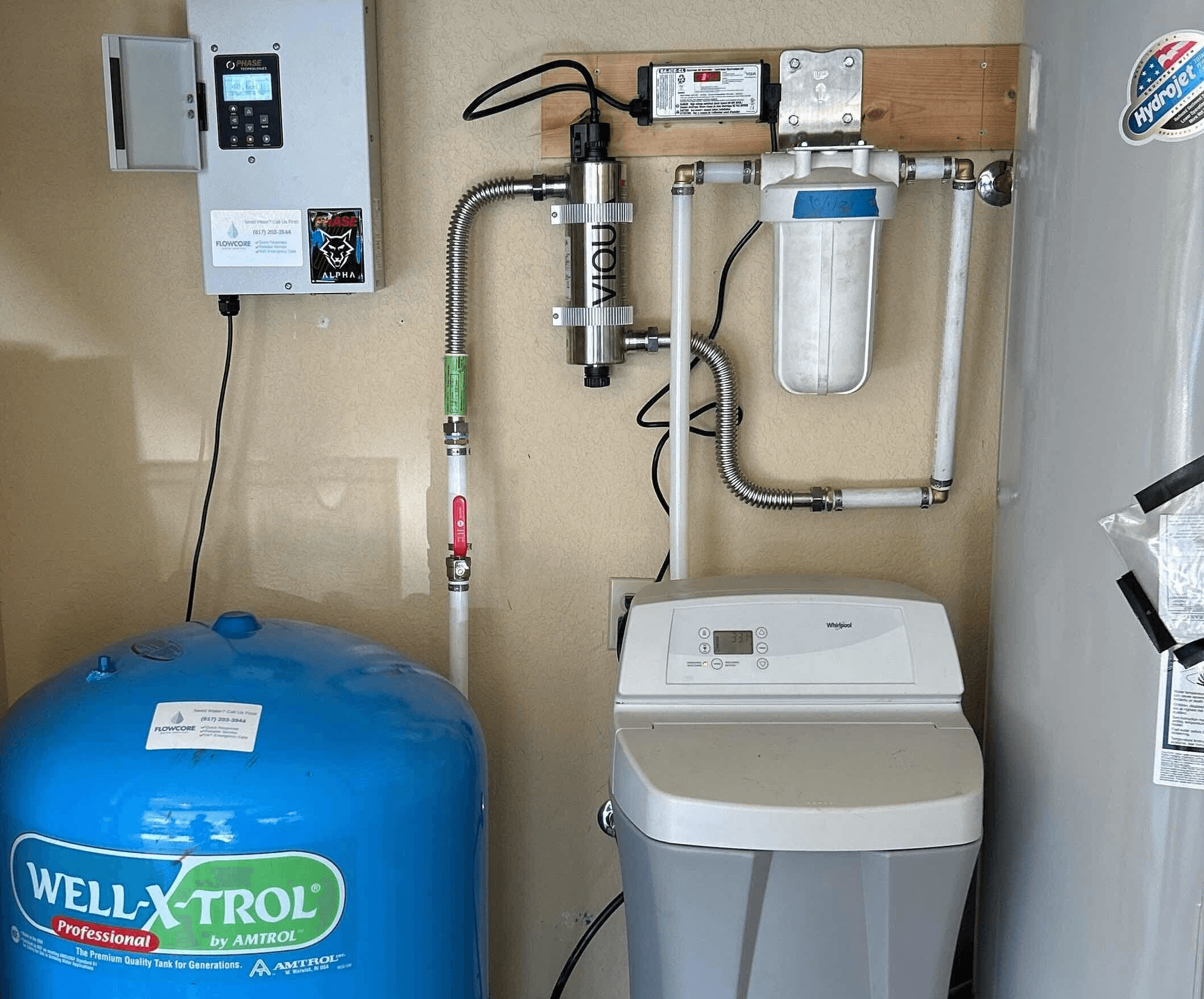
Chlorine shock kills what's currently in the system. UV prevents recolonization. We installed a UV disinfection assembly with a sediment pre-filter ahead of it, sized for the household's peak demand. From this point forward, every gallon of water entering the home passes through ultraviolet light strong enough to disrupt bacterial DNA, including any iron bacteria that survived in pockets the chlorine couldn't reach. The pre-filter protects the UV bulb from being shadowed by sediment, which is what makes the UV stage durable instead of a maintenance headache. For homes that also need iron, hardness, and aesthetic water quality dialed in, this is also the right point in the system to plan for whole-house filtration.
3. Phase Tech Alpha Drive Constant-Pressure Conversion
The third step is what makes the rehab durable. The existing pump on this property was a single-phase residential motor that had been short-cycling for months because of a failed pressure tank bladder, with the bladder failure itself caused by iron bacteria fouling. Replacing the pump and motor would have been one option. Instead, we installed a Phase Tech Alpha Drive — a constant-pressure controller that lets a single-phase motor deliver smooth, demand-matched pressure up to 2 HP without swapping the motor itself. The Alpha Drive eliminates the on/off cycle pattern that killed the original bladder and that puts the motor windings through repeated heat shocks. The pump now runs at the exact speed the home is asking for, the pressure tank stops being the system's weak point, and the motor's expected service life resets. This is the piece of the rehab none of our benchmarked competitors document — and it's the difference between a well that needs another pump in 18 months and one that runs cleanly for years.
If you're staring at a similar problem on your own well, our well rehabilitation service handles all three layers — chlorine shock, UV install, and pressure system rebuild — as one coordinated job.
How Do You Get Rid of Iron Bacteria for Good?
The short answer is: you don't shock-and-walk-away. The longer answer is that a durable fix is a three-layer rehab — kill what's there, prevent recolonization, and remove the conditions that let the colony thrive. Single-step approaches tend to disappoint, which is why so many homeowners think iron bacteria is "incurable." It's not. It just needs the right sequence.
What about a softener or filtration system after the rehab?
For homes with high iron, manganese, or hardness on top of the iron bacteria problem, the right next step after rehab is a properly sized iron filter, water softener, or whole-house filtration package — installed downstream of the UV stage, not upstream. The UV does its job in clean water; the filtration handles the dissolved minerals; and the two together mean fixtures stop staining, appliances last, and the rebuilt pressure system isn't fighting against fouled water again. This is also the right time to test for coliform bacteria, since iron bacteria's oxygen-poor environment can shelter other organisms that won't show up on a basic mineral panel. If iron staining and water clarity have been an issue alongside the iron bacteria, our deep dive on common water quality issues in Texas wells covers the parallel cluster.
A note for NE DFW estate properties: many private wells in Grapevine, Southlake, Colleyville, and Westlake have been on the same pump and pressure tank since the home was built. If your well system is approaching or past 15 years old and showing iron bacteria signs, the rehab is also the right moment to evaluate whether the existing pump and pressure system is worth saving or whether the constant-pressure conversion paired with a new tank is the cleaner long-term call. We do this evaluation at no additional cost during the rehab visit.
Frequently Asked Questions About Iron Bacteria in North Texas Wells
Is iron bacteria in well water dangerous to drink?
Iron bacteria itself is not classified as a human pathogen, so the bacteria alone is generally not considered dangerous to drink. The real concerns are secondary. Iron bacteria creates an oxygen-poor environment inside the well, pump, and plumbing where other harmful organisms — including coliform bacteria — can thrive. It also stains fixtures, ruins laundry, plugs filters, and accelerates pump and pipe corrosion. Anyone on a private well in North Texas seeing slime or rust in the system should have the water tested for both iron bacteria and coliform before continuing to drink it.
What does iron bacteria look like compared to regular iron staining?
Regular iron in well water typically shows up as orange or rust-colored staining on fixtures, dishes, and laundry. Iron bacteria looks different. It produces a slimy, almost gel-like buildup — often reddish-brown but sometimes greenish or yellow — that clings to the inside of toilet tanks, pressure tanks, and well casings. Pulling a pump and seeing the discharge pipe coated in slime that rinses off in chunks is a strong indicator. So is a sulfur or rotten-egg smell that appears or worsens after the water sits unused, like after a weekend away.
Can I just shock my well with chlorine and be done with iron bacteria?
Chlorine shock alone often knocks the population back temporarily, but iron bacteria tends to recolonize within weeks or months when the underlying conditions haven't changed. A durable fix typically involves three layers: a thorough chlorine flush of the well casing, plumbing, and water heater; a UV disinfection assembly that continuously disinfects water as it enters the home; and, when the pump and motor have been damaged or are short-cycling, a pressure system upgrade so iron-laden water isn't sitting in stagnant pockets. Skipping the second and third layers is the most common reason a chlorine shock fails.
Why is iron bacteria so common in NE DFW wells around Grapevine, Southlake, and Colleyville?
The geology of NE DFW — including the Grapevine, Southlake, Colleyville, and Westlake corridor — sits on aquifer zones with naturally occurring iron and sometimes manganese. Private estate wells in this corridor are often deeper and slower-flow than rural production wells, which means water sits in the well casing longer between cycles. Slow-moving, iron-rich water in oxygen-poor casing is exactly the environment iron bacteria thrives in. Add summer heat, irrigation demand cycles, and an aging pressure tank with a waterlogged bladder, and the conditions compound.
How long does a full iron bacteria well rehabilitation take?
A typical residential well rehab spans more than one visit because the chlorine shock has to dwell in the system, the homeowner has to flush every fixture and water-using appliance until the chlorine clears, and any UV or constant-pressure equipment has to be installed and tested. Plan on the system being partially out of service for at least part of the work, and on confirming results with a follow-up water sample after everything is back online. Trying to compress all of it into a single short visit is the most common reason rehabs underperform.
What signs should make a North Texas well owner call a well company instead of waiting?
Call when any of these show up: visible slime in the toilet tank or at the pressure tank, rust or red-brown staining that returns after cleaning, a sulfur smell that gets worse after the water sits, a steady drop in water pressure or flow at fixtures, a pump that cycles on every 30 to 60 seconds, and any change in water color after a power outage or storm. Each one of those points to either iron bacteria, a failing pressure system, or both — and the longer the wait, the more damage accumulates inside the pump, motor, and tank.
Flowcore handles iron bacteria rehabs across NE DFW — including well services in Grapevine and well services in Southlake — as well as the rural fringe of NW Tarrant County. Call (817) 480-7971 for a same-day diagnosis, or read more about our well rehabilitation process before you book.
Get Pre-Approved Financing
Flowcore Water partners with Greensky to offer convenient financing options for water well services
Flowcore Water Preferred Customer Membership
Enroll today and enjoy the year-long benefits!


