


You bought the place, the well came with it, and nobody has told you a single useful thing about it. You are standing in front of equipment you did not choose, cannot name, and are not sure you should touch. That is the position most people are in when they call us about a well that has not been used in years, and the first thing worth saying is that it is common and usually recoverable.
Before you do anything else, call (817) 480-7971 or book an assessment. The rest of this explains what we would be looking for and why the order matters.
Do Not Just Switch It On
This is the single most expensive mistake available to you, and it is also the most tempting one. Flipping the breaker to see whether anything happens feels like a free test. It is not.
What actually breaks
Three things go wrong when a long-idle pump gets power, and any of them turns a repair into a replacement.
The motor seizes. Bearings dry out and rust binds the shaft, and forcing electricity into a motor that cannot turn is how you finish it off rather than wake it up.
The pump loses its prime and runs dry. A pump moving no water destroys its own seals in a matter of minutes, and at that point the motor is a replacement rather than a repair.
The startup sequence goes wrong. Opening valves too quickly loses prime before the system has drawn water, which produces the same outcome by a slightly different route.

The check that costs nothing is confirming the motor still turns freely before any power reaches it. On a shallow jet system that is sometimes possible at the surface. On the submersible pumps common across North Texas it is not, because the motor is hundreds of feet underground.
What Can You Find Out Before Anyone Touches It?
More than most new owners expect, and it costs nothing. This is the part that turns "I have no idea what I own" into a set of facts you can act on.
Your well probably has a state record
Texas has required drillers to file a report for a long time, and those reports are public. Wells drilled from 2003 onward sit in the Texas Water Development Board's Submitted Drillers Reports database, which you can search by owner name, street address, driller name or the period it was drilled. Wells drilled before 2003 are in the TCEQ Water Well Report Viewer as scanned paper copies. Anything from 2003 to 2005 might be in either.
What you get back is genuinely useful: the date it was drilled, the depth, the hole diameter and what it was originally drilled for. A well recorded at 480 feet and a well recorded at 90 feet are entirely different propositions, and knowing which you have before anyone quotes you is worth the twenty minutes.
One practical tip, because the search is fussier than it looks: enter less rather than more. It matches exactly, so the street name on its own will often find what the full address misses.
What you can see for yourself
Walk the system and photograph it. The wellhead and its cap, the pressure tank, the control box, and whatever treatment equipment sits between the well and the house. You do not need to know what any of it is called. A handful of photographs lets someone who does know tell you a surprising amount before a truck is ever dispatched.
What You Cannot Tell From the Surface
Here is the honest limit of what looking gets you. Almost everything that determines whether this well comes back is out of sight.
Whether the pump is seized. Whether the drop pipe and the electrical wire running down to it have corroded through. Whether the check valve has failed. Whether the screen has sanded in while the well sat still. None of that is visible, and none of it can be inferred from a wellhead that looks tidy.
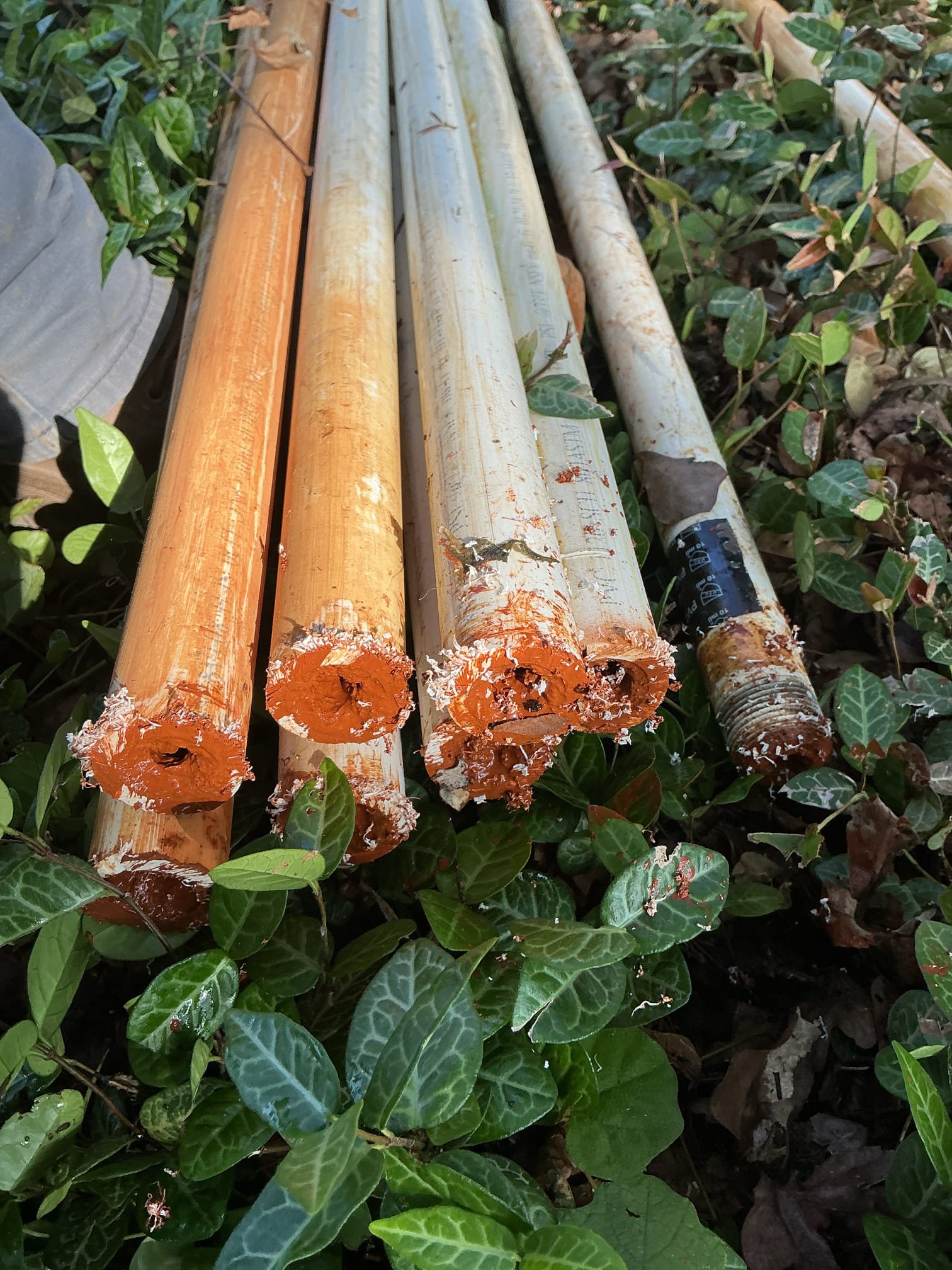
Which is why, on a well that has been dormant for years, the honest answer usually involves pulling the pump to see what you actually have. On a typical North Texas well that means bringing up several hundred feet of pipe, wire and pump, which is not a job that gets done with a truck and enthusiasm. It is also the point at which guessing stops and diagnosis begins.
Is the Water Safe After Sitting?
Not yet, and this is the part people most often skip. Water that has sat still in a well is not the same as water that has been drawn regularly, and clear water tells you nothing about what is living in it.
Extension guidance specifically recommends shock chlorination when an unused well is returned to service. The chlorine needs 12 to 24 hours of contact time, after which the system is flushed until the smell has gone. Then comes the part almost nobody mentions: wait 5 to 7 days, discharging 250 to 280 gallons a day, and retest for total coliform and E. coli. The water is safe when the test says so and not before.
So testing the water is not an upsell on an inherited well. It is the only thing that answers the question, and it also sets the baseline you will judge everything else against.
Is the Well Worth Bringing Back?
Sometimes the answer is no, and you deserve to hear that plainly rather than discover it after three visits. The judgement splits along one line: the condition of the well as a structure, and the condition of the well as a producer.
A well with sound casing and a screen that has silted up is a good candidate. That is what well rehabilitation exists for, and a well that has simply been sitting is often the easiest kind to bring back, because the problem accumulated slowly and was never made worse by hard use.
A well with cracked or corroded casing is a different conversation, as is one that was never much of a producer to begin with, which the driller's report will sometimes hint at. In those cases the useful thing we can do is tell you early.
What About the Equipment That Came With It?
Almost every inherited system arrives with treatment gear nobody has explained. An empty brine tank in the garage. A softener of unknown age. A UV unit with a bulb that expired at some point during the previous ownership. A filter housing with a cartridge in it that should have been changed years ago.
The instinct is to get it all running again. The better move is to test the water first, because treatment equipment is only correct if it matches what is actually in the water, and on an inherited system you have no way of knowing whether the previous owner sized it properly or simply bought what a salesman put in front of them.
Once the test comes back, the decisions get easy. Sometimes the existing gear is fine and simply needs servicing. Sometimes it is solving a problem you do not have, and the right treatment looks nothing like what is bolted to the wall. Either way the water tells you, rather than the equipment.
The Order That Saves Money
If you take one thing from this, take the sequence. Look up the records. Photograph what you have. Get the system assessed before it gets powered up. Test the water. Then decide about equipment.
Almost every expensive outcome we are called in to unpick started with those steps happening in a different order, usually with the breaker being flipped first. If you have not bought yet and you are reading this while deciding, our pre-purchase well inspection checklist covers the version of this you can still negotiate on.
Flowcore Water handles well inspections and well repair across North Texas and the DFW Metroplex, and we would rather look at your well before it gets switched on than after. Call (817) 480-7971.
Frequently Asked Questions About Wells That Have Not Been Used
Can I just turn the power on and see if the well works?
You can, and it is the most common way a repair turns into a replacement. A pump that has sat for years can be seized, and forcing power to a motor that will not turn does real damage. If the pump runs without water it destroys its own seals in minutes. The check that costs nothing is confirming the motor still turns freely before any power reaches it, which on most systems is not something a homeowner can do from the surface.
How do I find out how deep my well is if I have no paperwork?
Texas keeps the records. Wells drilled from 2003 onward appear in the Texas Water Development Board's Submitted Drillers Reports database, searchable by owner name, street address, driller name or drill date. Wells drilled before 2003 are in the TCEQ Water Well Report Viewer as scanned paper copies, and wells from 2003 to 2005 can be in either. The report typically gives the date drilled, the well depth, the hole diameter and the proposed use. Search with less rather than more, since the system matches exactly, so try the street name on its own before the full address.
Is the water safe to drink after a well has sat unused?
Not until it has been disinfected and tested. Extension guidance specifically recommends shock chlorination when an unused well is returned to service. The chlorine needs 12 to 24 hours of contact time, then the system is flushed until the smell is gone. After that the guidance is to wait 5 to 7 days, discharging 250 to 280 gallons a day, before retesting for total coliform and E. coli. The water is safe only when the test comes back with no coliform present. Anyone who tells you it is fine because it looks clear is guessing.
Why does the pump have to come out just to tell me what is wrong?
Because almost nothing that matters is visible from the surface. Whether the pump is seized, whether the drop pipe and wire have corroded, whether the check valve has failed, whether the screen has sanded in, all of it sits hundreds of feet down. On a typical North Texas well, that is several hundred feet of pipe and wire that has to come up before anyone can give you an honest answer rather than a guess.
Someone called it a catch well. What does that mean?
That is not a standard term in the trade, so it is usually someone's own description of what they are looking at. It most often turns out to be a hand-dug or bored well, a cistern collecting surface or rainwater, or an old stock well. The three are very different things with very different prospects, and telling them apart is a job for someone standing at the wellhead. Send a photograph and we can usually narrow it down before anyone drives out.
Do I need one company for the well and another for the softener and irrigation?
You should not need several, and that is worth asking directly before anyone starts. A property that has sat usually needs the well assessed, the water tested, the treatment equipment looked at and often the irrigation checked, and splitting that across three contractors means three diagnoses that do not talk to each other. Flowcore Water is a licensed TDLR Water Well Driller and Pump Installer and covers well work, water treatment and plumbing, so the assessment stays in one place.
The brine tank is empty and I do not know what the equipment does. Where do I start?
Start with a water test rather than the equipment. Treatment gear is only correct if it matches what is actually in the water, and on an inherited system nobody can tell you whether the previous owner sized it properly or simply bought what a salesman offered. Once you know what the water contains you can judge whether the softener, filter or UV unit is worth recommissioning or whether it was solving a problem you do not have.
By Robert Reagan, CEO, Flowcore Water
Licensed TDLR Water Well Driller and Pump Installer. Member of the National Ground Water Association and the Texas Ground Water Association.
Get Pre-Approved Financing
Flowcore Water partners with Greensky to offer convenient financing options for water well services
Flowcore Water Preferred Customer Membership
Enroll today and enjoy the year-long benefits!

