

Hail and Wind Damage to Your Well System: What to Check After a North Texas Spring Storm
May 16, 2026
Hail comes through North Texas in waves every spring, and most homeowners don't think about their well system until something stops working. Then the pressure drops, the pump won't kick on, or there's a slow drip at a connection that wasn't there last week. By the time the call comes in, the storm has already moved on — and the damage has been sitting at the wellhead for hours or days. If your property in Saginaw, Haslet, Lake Worth, Eagle Mountain, Southlake, Colleyville, or Grapevine just took a hit from hail or high wind, here's the field-built checklist for what to look at, what's likely damaged, and when to call.
For emergency well and pump repair across DFW, call (817) 480-7971 or contact our team.
What Kind of Storm Damage Affects a Well System?
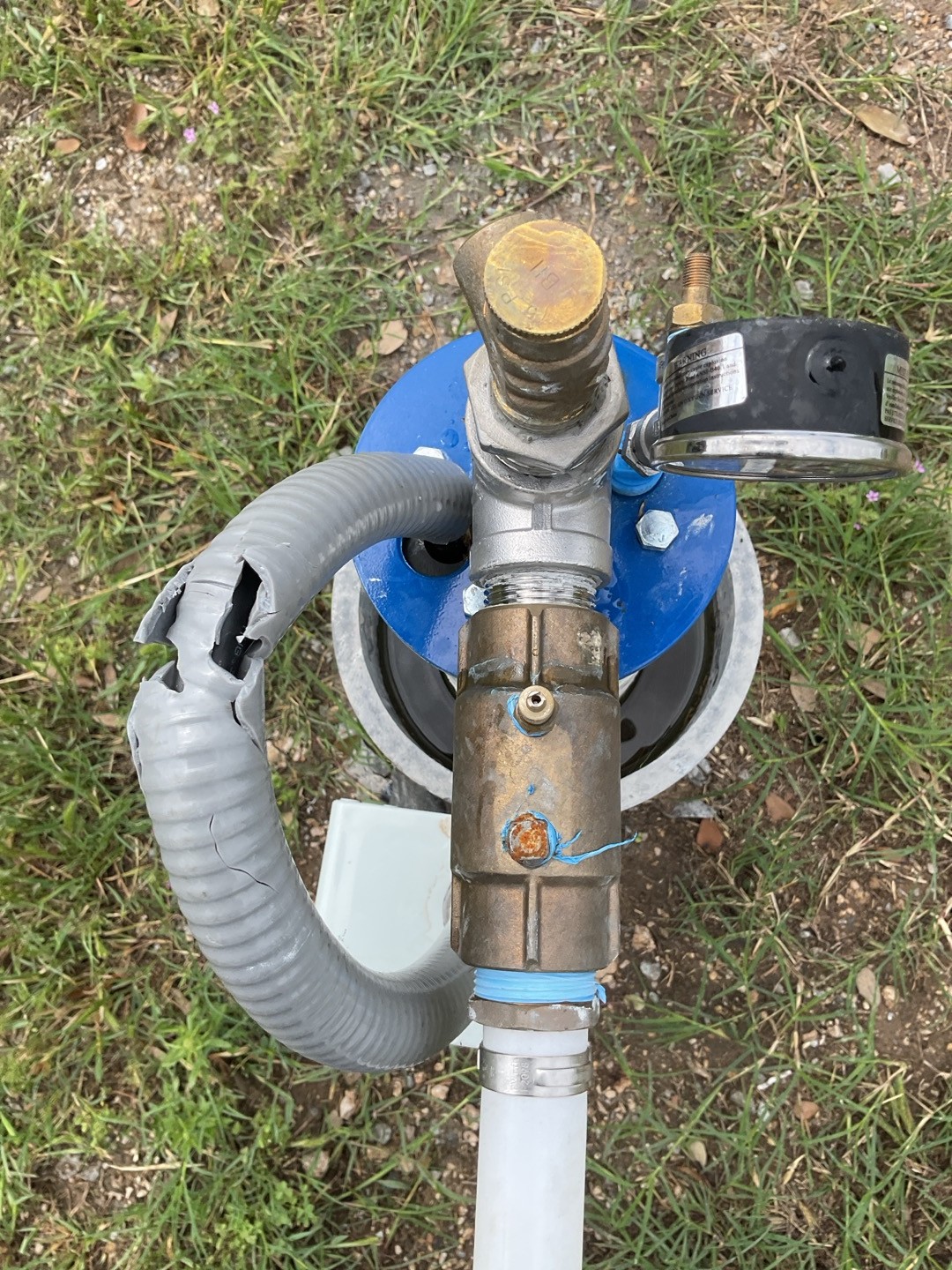
The well casing itself is below grade and almost always survives a storm intact. The damage shows up on the surface hardware — the parts of the system you can see standing next to the wellhead. Hail dents and cracks the cable cover that protects the pump wiring. High wind tears at conduit and junction boxes mounted to a barn or wellhouse wall. Lightning travels through buried wiring and takes out the control box. And in many spring inspections, unresolved damage from the last winter freeze cycle finally surfaces — a cracked pressure switch diaphragm, a split bleeder valve, a ruptured bladder inside an aging pressure tank. Each one of those failures looks different at the tap, and missing the right diagnosis sends homeowners down the wrong repair path.
Common Failure Points After a North Texas Hailstorm or Spring Storm
These are the components that come up most often after a hail or wind event in North Texas. The pattern is consistent across both rural NW Tarrant properties and NE DFW estate properties — what differs is which component fails first.
Wellhead and Well Seal
The well seal sits on top of the casing and keeps surface water, debris, and insects out of the well. Hail rarely cracks the seal itself, but the bolts and clamp can shift after an impact, and the seal can lift slightly. A lifted seal lets contaminated runoff into the casing — which means a chlorine shock and a water test on top of the original repair if the damage isn't caught early. Walk the wellhead and look for unseated hardware, daylight visible between the seal and the casing, or any debris that wasn't there before the storm.
Control Box and Electrical Conduit
The control box is the brain of a submersible pump system. It runs the capacitors that start the motor, and it's typically mounted to a barn wall, wellhouse wall, or weather-rated enclosure near the wellhead. Lightning surges and direct hail impact both kill control boxes. Conduit runs from the wellhead to the control box and from the control box to the home — wind and hail can pull conduit loose at the junction boxes, exposing wiring. If you see exposed conductors, treat the wellhead as live and stay back until a tech with the right equipment can isolate it.
Pressure Tank and Pressure Switch
The pressure tank and pressure switch are the components homeowners most often misdiagnose after a storm. A hail impact on an exposed tank can dent the shell or shift the bladder. A cracked diaphragm in the pressure switch — which can come from a hail strike or from unresolved damage from the last winter freeze cycle — produces erratic on/off behavior. Both feel like "the pump is failing." Neither is. Replacing the pump first sends the homeowner through several hundred dollars of unnecessary work and the symptom comes right back.
Bleeder Valve, Cable Cover, and Exposed Wiring
The smaller surface components are the most frequently damaged in any North Texas storm. The cable cover is plastic and brittle under hail. Pump wiring exits the well casing at the wellhead and is rarely fully shielded against a direct impact. These parts are inexpensive on their own — the cost shows up when exposed wiring sits through the next rainstorm and shorts the entire pump motor.
How Do You Tell If Storm Damage to a Well Is Urgent?
Three signs move a post-storm call from "schedule it this week" to "schedule it today." Discolored water at the tap means surface water or sediment has entered the casing — this can mean a compromised well seal or a cracked pitless adaptor. A pump that short-cycles in 30 to 60 second intervals after a hail event means the pressure switch or pressure tank took damage. Exposed wiring at the wellhead or control box means a fire and electrocution risk that doesn't wait for a scheduled appointment. Any one of those three is grounds to call the same day. If water is clear, the pump is cycling normally, and no wiring is exposed, the system can hold until a scheduled inspection — but don't push past the next storm front.
How Hail and Spring Storm Damage Looks Different on Rural NW Tarrant vs. NE DFW Estate Wells
The geography of North Texas creates two different failure profiles. Properties in Saginaw, Haslet, Lake Worth, Eagle Mountain, and Azle typically have wellheads out in open pasture, sometimes 50 to 200 feet from the home with conduit running through unprotected ground. Direct hail exposure, wind-borne debris, and post-storm flooding all hit these wellheads harder. Cable cover cracks, conduit pulls, and well seal lifts are the most common storm calls in these areas — and the rural Saginaw soil profile means standing water around a compromised wellhead is a real contamination risk.
Estate properties in Southlake, Colleyville, Grapevine, and Westlake typically have the wellhead protected inside a built wellhouse — a small outbuilding with the pressure tank, control box, and softener inside. Surface hardware is sheltered, so direct hail damage to the wellhead is less common. What's more common on these properties is latent damage from the last winter freeze cycle — cracked irrigation backflow preventers, dented pressure tanks, and outdoor hose bibs that weren't fully diagnosed at the time and now leak under summer demand. Estate calls often come in as "irrigation problem" in spring and resolve as "well pressure system rebuild" after a real diagnostic.
If you're not sure what your system looks like inside the wellhouse, this is also a good moment to schedule a baseline well inspection and maintenance visit — most estate wellhouses haven't been opened in a year or more.
Frequently Asked Questions About Storm Damage to Wells in North Texas
Can hail actually damage a well system if the casing is in the ground?
The casing itself is mostly protected because it's below grade, but everything attached at the surface is exposed. Hail and wind regularly damage the cable cover that protects the pump wiring, the bleeder valve, the well seal hardware, and the conduit and junction boxes running to the control box. On rural Saginaw and Eagle Mountain properties, where wellheads sit out in open pasture, that exposure is greater than on a Southlake estate property where the wellhead is often inside a wellhouse — but neither setup is hail-proof.
What should I do first after a hailstorm or high-wind event if I have a well?
Three steps before you call. First, do not touch the wellhead or any exposed wiring — hail-cracked cable covers and conduit can leave live conductors exposed. Second, run a fixture inside the home and listen for the pressure tank cycle. If the pump kicks on and stays on, or kicks on and off rapidly, that's a sign the pressure system or pump took damage. Third, walk the wellhead from a safe distance and photograph the cable cover, well seal, conduit, and any visible cracks or unseated fittings. Those photos help the well company triage your call faster.
Will homeowners insurance cover storm damage to a well system?
Coverage varies by policy and carrier. Many policies cover damage to the visible mechanical and electrical components of a well system when the damage is caused by a covered peril like hail, wind, or lightning. Some policies exclude underground equipment unless a rider is added. The well company's role is to document what was damaged, what the cause-of-failure was, and what's needed to repair or replace — the homeowner files the claim. A clear photo set and a written diagnostic report from the inspection are what most adjusters ask for.
How do I tell if storm damage is causing my well pump to short-cycle?
Short-cycling — the pump kicking on and off every 30 to 60 seconds — usually points to a pressure tank bladder problem or a pressure switch problem, not the pump itself. A hail impact on an exposed tank can dent the shell or shift the bladder, and unresolved damage from the last winter freeze cycle often surfaces in spring as a cracked pressure switch diaphragm. Replace the pump first and the cycling will come right back. The correct sequence is to test the pressure switch, drain and pressure-check the tank, and only after both are confirmed do you look at the pump and motor.
How is post-storm well damage different in rural NW Tarrant vs. NE DFW estate properties?
Two different failure patterns. Rural Saginaw, Haslet, Lake Worth, and Eagle Mountain properties typically have wellheads out in open pasture or beside a barn — full hail and wind exposure. The most common spring storm calls in these areas are cable cover cracks, exposed conduit, and unseated well seals. NE DFW estate properties in Southlake, Colleyville, Grapevine, and Westlake typically have the wellhead inside a wellhouse, so the surface hardware is protected — but estates also tend to carry latent damage from the last freeze cycle (cracked irrigation backflow preventers, dented pressure tanks, frozen outdoor hose bibs) that wasn't caught at the time and shows up during spring inspections.
How quickly should I call a well company after a North Texas storm?
Sooner is better for two reasons. First, exposed wiring or a compromised well seal can let surface water and contaminants into the casing — every day that goes by raises the chance of needing a chlorine shock and water test on top of the original repair. Second, North Texas storm seasons cluster — once one front pushes through, another usually follows within days, and a wellhead that's already compromised will fail harder on the next round. If the system is still pressurizing and water is clear at the tap, you have some time. If water is discolored, the pump is short-cycling, or wiring is exposed, treat it as urgent. Bad-enough damage to the casing or the pump itself sometimes calls for a full well rehabilitation rather than a one-component fix.
Flowcore Water handles post-hail and post-storm well diagnostics across NW Tarrant and NE DFW — well services in Saginaw and well services in Southlake book first when the radar lights up. Call (817) 480-7971. For the winter side of the seasonal equation — how to prep your well system before the next freeze — read our companion piece on protecting your water well before a North Texas freeze.
Get Pre-Approved Financing
Flowcore Water partners with Greensky to offer convenient financing options for water well services
Flowcore Water Preferred Customer Membership
Enroll today and enjoy the year-long benefits!


