

Water Softener, Whole-House Filtration, or Reverse Osmosis: What Does Your Well Actually Need?
July 31, 2026

Ask three different companies what your well needs and you can end up with three different answers: one wants to sell you a softener, one pushes whole-house filtration, one leads with reverse osmosis. All three technologies are real and useful, but they solve different problems, and installing the wrong one means paying for equipment that never touches the actual complaint in your water. Before you buy anything, it helps to know exactly what each system does, what it doesn't do, and how to tell which one your well actually needs.
Not sure which system fits your water? Call (817) 480-7971 and Flowcore's water treatment team can test your well and recommend equipment based on what's actually in your water, not a default package.
What's the Difference Between a Water Softener, Whole-House Filtration, and Reverse Osmosis?
These three systems get bundled together in conversation because they're all "water treatment," but each one is built to solve a narrow, specific problem. Understanding the boundary between them is the fastest way to stop overpaying for the wrong equipment.
Water softener
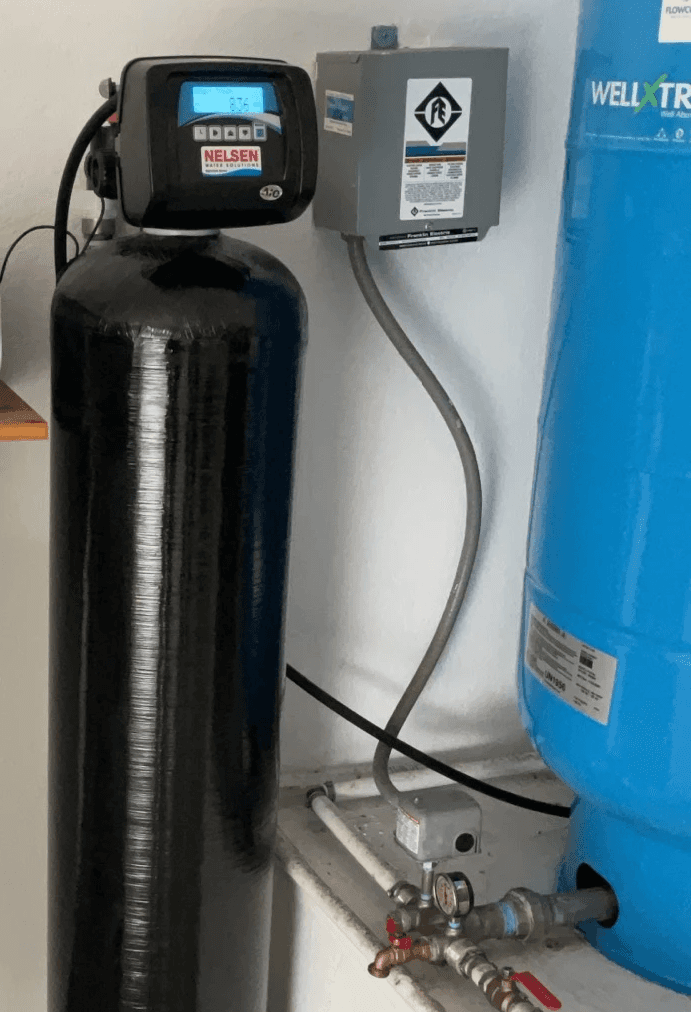
A softener uses ion exchange to remove calcium and magnesium, the minerals responsible for hard water. It protects plumbing, water heaters, and appliances from scale buildup and cuts down on soap scum and spotting. It is not built to remove iron, sulfur odor, sediment, or dissolved contaminants in any meaningful way, even though hard water and those other issues often show up in the same well.
Whole-house filtration
Whole-house filtration treats water at the point it enters the home, before it reaches any fixture. Depending on the media used, it can address sediment, iron, sulfur odor, and chlorine taste across every tap in the house. Flowcore's whole-house filtration systems are installed at the point of entry specifically because problems like iron staining or rotten-egg smell affect every fixture, not just the kitchen sink.
Reverse osmosis
Reverse osmosis pushes water through a semi-permeable membrane to remove a high percentage of dissolved solids, and it's typically installed at a single point of use, most often the kitchen tap, rather than treating the whole house. It's the right tool when the goal is better-tasting, cleaner drinking and cooking water, but it doesn't protect pipes or appliances the way a softener does, and it isn't a practical way to treat an entire home's water supply. Flowcore's reverse osmosis systems are typically paired with whole-house treatment rather than installed as a standalone fix for a whole-home water quality complaint.
Which System Actually Fixes Iron and Sulfur (Rotten-Egg) Smell in Well Water?

This is where the most expensive mismatched purchases happen. A softener alone does not remove iron or neutralize hydrogen sulfide gas, the compound responsible for a rotten-egg smell, no matter how well it's sized or installed. Iron and sulfur need to be oxidized, converting them into a form that can be physically filtered out, which is a different mechanism entirely from the ion exchange a softener performs. Air injection oxidation systems and catalytic filtration media handle this for moderate levels, while stronger chemical injection, using a small hydrogen peroxide feed ahead of a carbon filter, is typically used for more severe sulfur odor. Whichever method fits your specific water, the point is the same: sulfur and iron are treated ahead of, or separately from, hardness, and a well with both problems generally needs the iron/sulfur stage installed before the softener so the softener's resin bed isn't fouled by iron it was never designed to handle.
One important distinction: if the smell is paired with a slimy, gel-like buildup inside toilet tanks or the pressure tank rather than just an odor, that's often iron bacteria, a biological fouling problem inside the well itself rather than something home treatment equipment resolves. Flowcore's guide to iron bacteria and the well rehab process covers that specific situation, which needs to be addressed at the well before any treatment system installed at the house will perform as expected.
Do I Need More Than One System?
Most wells don't need every system running at once, but a fair number need two working together. The right approach is to work through this in order rather than guessing at the finish line first.
Step one: test the water
A water test that separates iron from manganese, and geologic sulfur from bacterial sulfur, tells you which category you're actually dealing with before you spend money on equipment. Understanding your water test results is the starting point for every recommendation that follows.
Step two: treat at the point of entry
If iron, sulfur, sediment, or chlorine taste show up in the test, a whole-house filtration system installed where water enters the home addresses those issues across every fixture, not just one tap.
Step three: protect the plumbing
If hardness is also present, a softener is added to protect pipes, water heaters, and appliances from scale. This typically runs downstream of the iron/sulfur treatment stage, not in place of it.
Step four: polish the drinking water
If better-tasting drinking and cooking water is a separate priority beyond what whole-house treatment provides, reverse osmosis at the kitchen tap is the final layer, not a substitute for the earlier steps.
If you're still narrowing down what's actually wrong with your water before you get this far, Flowcore's overview of common water quality issues in Texas wells walks through the symptoms tied to hard water, iron, sulfur, and bacteria side by side.
How Should You Choose the Right System for Your Well?
The short version: let a water test decide, not a sales conversation. A company that recommends a specific system before testing your water is guessing, and the cost of guessing wrong is a system that doesn't fix the actual complaint. A softener that never touches your rotten-egg smell, or an RO system installed when the real problem was whole-house iron staining, are both common and avoidable outcomes. Starting with a real water test, and choosing equipment based on what's actually in the water rather than what's easiest to sell, is what separates a system that solves the problem from one that just adds a monthly cost.
Frequently Asked Questions About Water Softeners, Whole-House Filtration, and Reverse Osmosis
Will a water softener get rid of the rotten egg smell in my well water?
No. A softener removes calcium and magnesium and isn't designed to neutralize hydrogen sulfide gas, which causes rotten-egg smell. Sulfur odor needs an aeration, oxidation, or air-injection system, sometimes paired with a catalytic carbon filter. Installing a softener alone when sulfur is the actual complaint is one of the most common mismatched purchases in well water treatment.
Do I need reverse osmosis if I already have a whole-house filter?
Often, yes, if drinking and cooking water quality is your main concern. Whole-house filtration addresses sediment, iron, sulfur odor, and general taste across the home, but it isn't designed to remove dissolved solids to the level reverse osmosis can. RO is typically installed at a single tap as a final polishing step, not a replacement for whole-house treatment.
What's the difference between an iron filter and a water softener?
A softener uses ion exchange to remove hardness minerals and isn't built to handle iron or sulfur in any real volume. An iron filter uses oxidation to convert dissolved iron into a solid form that can be filtered out. If your well has both hardness and iron or sulfur, the iron/sulfur filter is typically installed first, with the softener downstream, so the resin bed isn't fouled by iron it wasn't designed to remove.
How do I know if my water problem is iron, sulfur, or bacteria?
A water test that separates these categories is the only reliable way to know, since symptoms can overlap. Plain iron typically shows up as flat orange or rust staining. Sulfur shows up mostly as smell. Iron bacteria produces a slimy, gel-like buildup inside toilet tanks and pressure tanks rather than a flat stain, and it's a well-side fouling problem, not something a home treatment system fixes on its own.
Can I install just one system, or do I need all three?
Most wells don't need all three. Hardness alone needs a softener. Iron or sulfur alone needs an iron/sulfur filter. Multiple issues typically need an iron/sulfur filter and softener working together, with reverse osmosis added at the kitchen tap only if drinking water taste is a separate priority. A water test tells you which category actually applies before you spend money guessing.
How much does whole-house water treatment cost for a well?
Nationally, installed whole-house filtration systems for well water commonly run $800 to $4,000, water softeners run roughly $1,000 to $2,500, and reverse osmosis ranges from about $300 to $950 for an under-sink unit up to $4,800 to $8,000 for a whole-house setup, according to current Angi and HomeGuide market data. These are general market ranges, not a Flowcore quote, and actual cost depends on which combination your water test results call for.
If you're dealing with hard water, staining, odor, or water that just doesn't taste right, the fastest way to stop guessing is a real water test. Call (817) 480-7971 or schedule a water treatment consultation online, and see Flowcore's customer reviews for how past installations have held up. Flowcore also partners with GreenSky to offer financing options for larger treatment system installs.
Get Pre-Approved Financing
Flowcore Water partners with Greensky to offer convenient financing options for water well services
Flowcore Water Preferred Customer Membership
Enroll today and enjoy the year-long benefits!


