

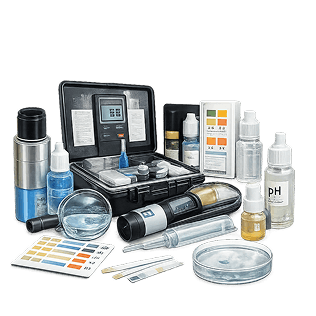
Well Water Testing in Dallas and Fort Worth
Our licensed North Texas technicians repair submersible pumps, pressure tanks, switches, wiring, and well system components for residential and rural properties across DFW.
Trusted by North Texas since 2006
Same-day Emergency Service
Financing Available
Skilled & Certified Professionals

Private well water in North Texas doesn't come with a quality guarantee. What comes out of the tap depends on the well's depth, the local geology, the condition of the casing, and what's happening in the soil and groundwater around it. Flowcore Water provides professional well water testing throughout the DFW metro — collecting samples, sending them to a certified laboratory, and reviewing the results with you so you know exactly what's in your water and what, if anything, needs to be addressed. Whether you've owned your well for years or just acquired a property with one, testing is the first step toward managing it correctly.
Call (817) 480-7971 to schedule well water testing across the DFW area.
What does well water testing actually measure?
A standard well water test checks for things most relevant to health and system performance: coliform bacteria, e. coli bacteria, nitrates, pH, hardness (calcium and magnesium), iron, iron bacteria, manganese, and total dissolved solids. These are the contaminants most commonly found in North Texas well water and the ones most likely to affect either your health or your plumbing infrastructure.
Hardness is the most consistent finding in DFW-area wells. The region's limestone geology means groundwater picks up significant calcium and magnesium on its way to the aquifer, and that mineral load travels directly into your home if it isn't treated. High iron content is also common, particularly in Denton County and the surrounding rural corridors, and presents as rust-colored staining on fixtures, laundry, and appliances. Elevated nitrates are more localized but require attention when found, particularly in agricultural areas of the outer DFW counties. Coliform bacteria in a well is almost always a sign of casing compromise or surface water intrusion — treatable, but something that needs to be identified before the water is used for drinking or cooking.
For properties with specific concerns — proximity to industrial sites, a history of chemical use on the land, or unusual taste and odor — an expanded panel that includes volatile organic compounds, heavy metals, or pesticide residues may be appropriate. We'll discuss what panel makes sense for your property's history and location.
Why test even when the water looks and tastes fine?
Most well water contaminants are invisible and tasteless. Coliform bacteria, nitrates, and elevated hardness don't change how water looks. Iron can be present in low concentrations that don't affect taste but still stain fixtures and corrode appliances over years of use. A test is the only way to know what's actually in the water — not a proxy for it. The Texas Commission on Environmental Quality recommends annual testing for bacteria and nitrates at a minimum, and any time a repair has been made to the well, flooding has occurred near the property, or you notice any change in the water's appearance, taste, or smell.
For anyone who has recently purchased a property with a well, a baseline test is essential. You can't know the well's history from the sellers, and the well inspection and maintenance process — which documents the physical system — pairs directly with a water quality test that documents what the system is producing.
Well water testing results and next steps
A test result that shows elevated contaminants isn't a crisis — it's information. Most findings in North Texas well water are addressable with the right treatment approach. Hard water is resolved with a whole-house filtration or softening system installed at the main supply line. Elevated iron or manganese requires a targeted iron filter. Bacterial contamination typically points to a well casing or seal issue that needs repair before treatment is effective. For more complex results, Flowcore designs a customized water treatment solution based on the actual lab data — not a generic package.
If the test also reveals a problem with the well's mechanical performance — reduced pressure, sediment in the sample, or other signs of system decline — our well pump repair and well rehabilitation teams can address the underlying issue alongside any treatment work.
Frequently Asked Questions About Well Water Testing
How often should a private well be tested in Texas?
The Texas Commission on Environmental Quality recommends testing private well water at least once a year for bacteria and nitrates, and any time you notice a change in taste, odor, or appearance. Testing is also recommended after any well repair, flooding event, or nearby construction activity. For new property owners, a baseline test before using the well is essential.
What contaminants are most common in North Texas well water?
Well water in the DFW region and surrounding North Texas counties most commonly shows elevated hardness, iron, and in some areas nitrates from agricultural activity. Coliform bacteria can appear in wells with aging or damaged casing. The specific contaminants present depend on well depth, local geology, and proximity to agricultural or industrial activity. A laboratory test tells you exactly what's in your water.
What happens after Flowcore tests my well water?
You receive a lab report showing your water's composition. Flowcore reviews the results with you and, where levels exceed recommended thresholds, recommends a treatment approach matched to what your water actually contains — whether that's a whole-house filtration system, a water softener, or a targeted filter. Testing without a clear next step isn't useful — our goal is to give you the full picture and a path forward.
Schedule well water testing in DFW
Flowcore Water serves the full DFW metro and surrounding North Texas counties for well water testing, inspection, and treatment. If you need testing for a specific city, see our location pages below. To schedule directly, call (817) 480-7971 or request service online. For the full range of well services Flowcore provides across DFW, visit our well services hub.